Curtis Botanical Magazine
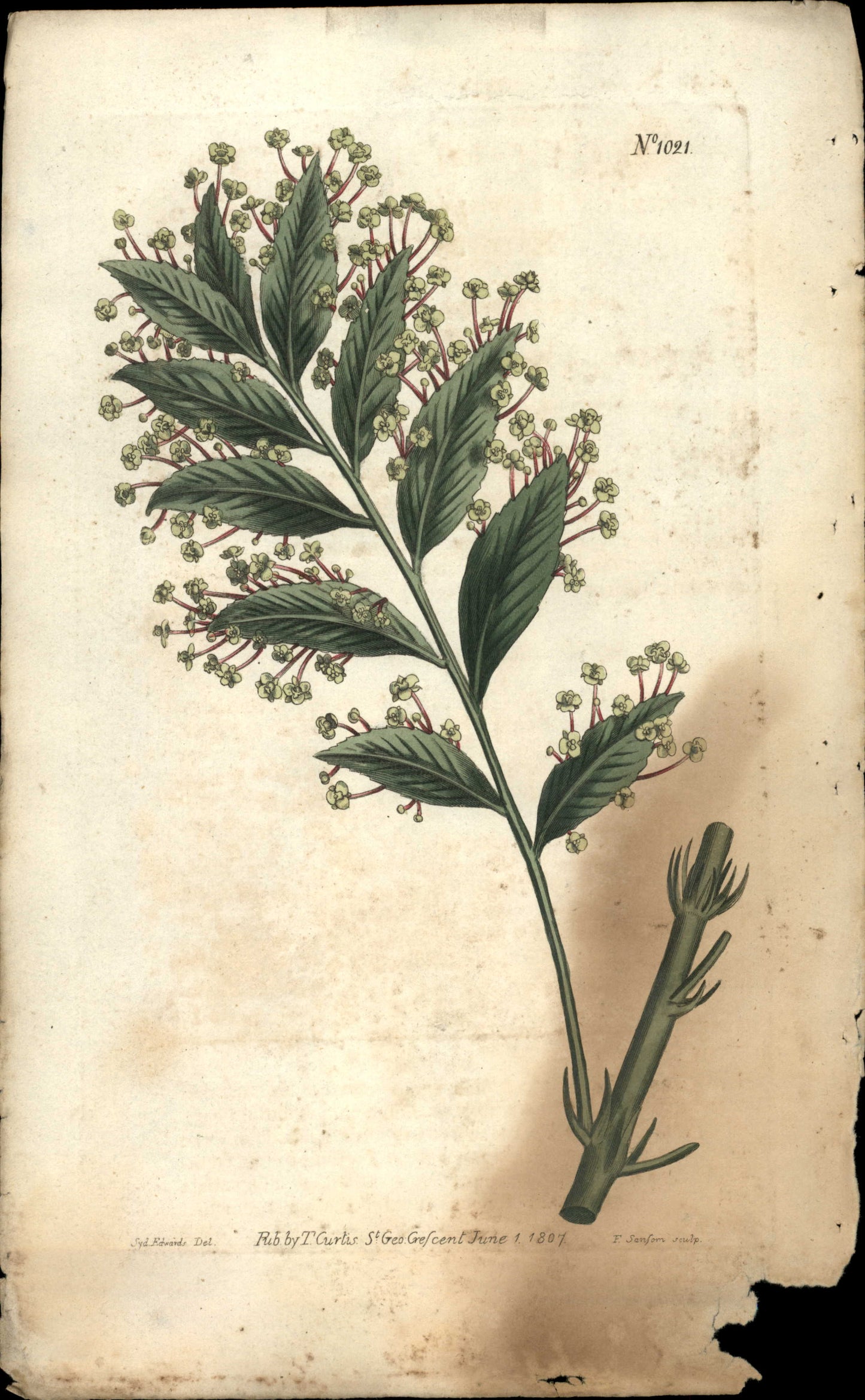
Curtis Botanical Magazine Plate 1021 - Xylophylla latifolia (Broad-leaved Xylophylla) | Original Hand-Colored Print
Curtis Botanical Magazine Plate 1021 - Xylophylla latifolia (Broad-leaved Xylophylla) | Original Hand-Colored Print
Couldn't load pickup availability
Original hand-colored antique botanical print from Curtis's Botanical Magazine - Plate 1021, Xylophylla latifolia (Broad-leaved Xylophylla).
- Plate: 1021
- Latin name: Xylophylla latifolia
- Common name: Broad-leaved Xylophylla
- Linnaean class / order: Monoecia / Monadelphia
- Publication: June 1, 1804
- Engraver: F. Sansom
- Medium: Original hand-colored engraving (physical print, not a reproduction)
Original Curtis text
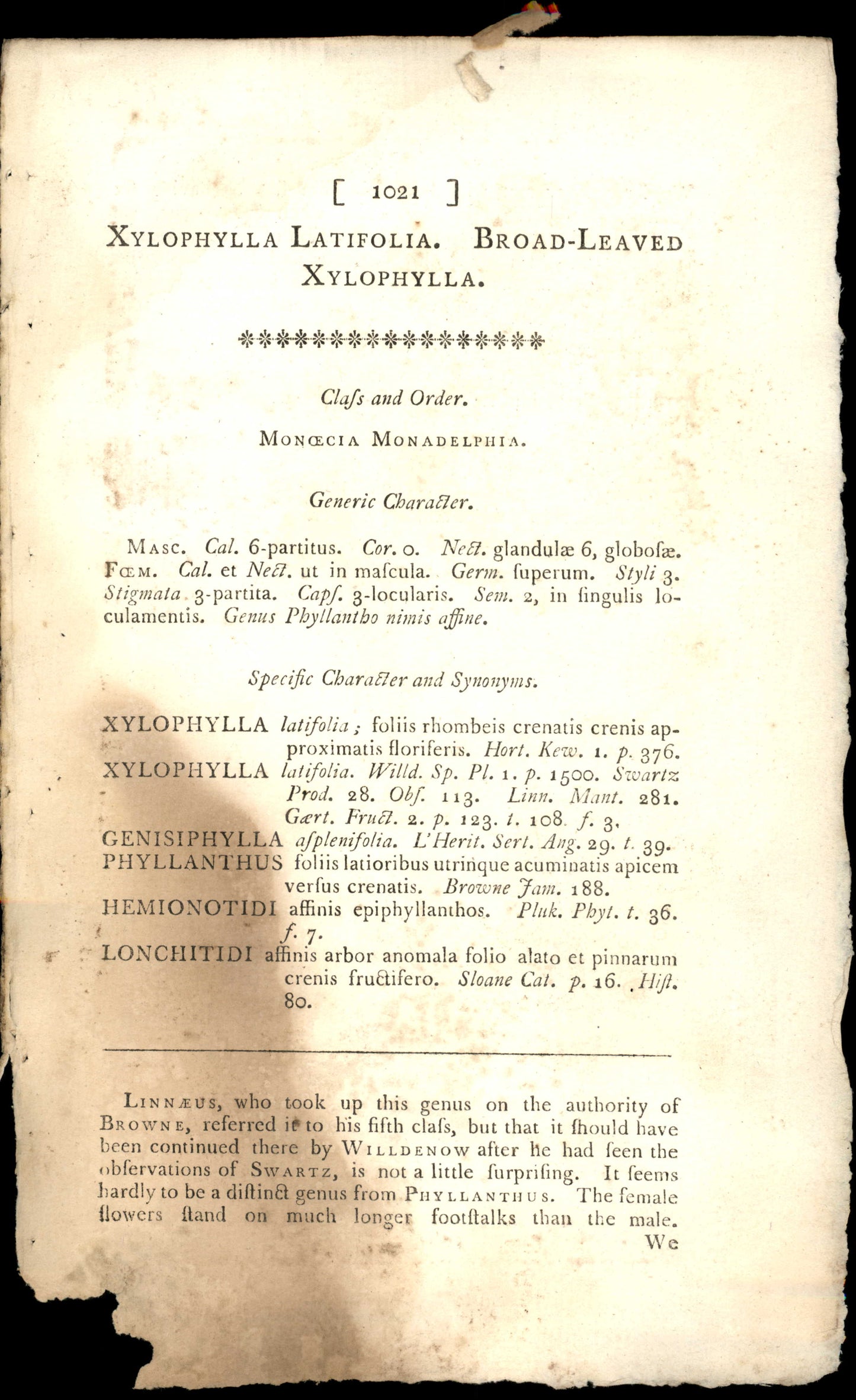
Transcribed from the plate's accompanying description page:
[ 1021 ]
XYLOPHYLLA LATIFOLIA. BROAD-LEAVED XYLOPHYLLA.
. . .
Class and Order.
MONOECIA MONADELPHIA.
Generic Character.
MASC. Cal. 6-partitus. Cor. 0. Nect. glandulae 6, globosae. Fil. valde numerosa, in fasciculum connexa. Anth. 2-locul. FEM. Cal. et Nect. ut in mascula. Germ. superum. Styli 3. Stigmata 3-partita. Caps. 3-locularis. Sem. 2, in linguis loculamentis. Genus Phyllantho nimis affine.
Specific Character and Synonyms.
XYLOPHYLLA latifolia; foliis rhombeis crenatis crenis approximatis florferis. Hort. Kew. 1 p. 376. XYLOPHYLLA latifolia. Willd. Sp. Pl. 1. p. 1500. Swartz Prod. 28. Obf. 113. Linn. Mant. 281. Gaert. Fruct. 2. p. 123. t. 108 f. 3. GENISIPHYLLA aplenifolia. L'Herit. Sert. Ang. 29. t. 39. PHYLLANTHUS foliis latioribus utrinque acuminatis apicem versus crenatis. Browne Fam. 188. HEMIONOTIDI affinis epiphyllanthos. Pluk. Phyt. t. 36. f. 7. LONCHITIDI affinis arbor anomala folio alato et pinnarum crenis fructifero. Sloane Cat. p. 16. Hist. 80. LINNAEUS, who took up this genus on the authority of BROWNE, referred it to his fifth class, but that it should have been continued there by WILDENOW after he had seen the observations of SWARTZ, is not a little surprising.
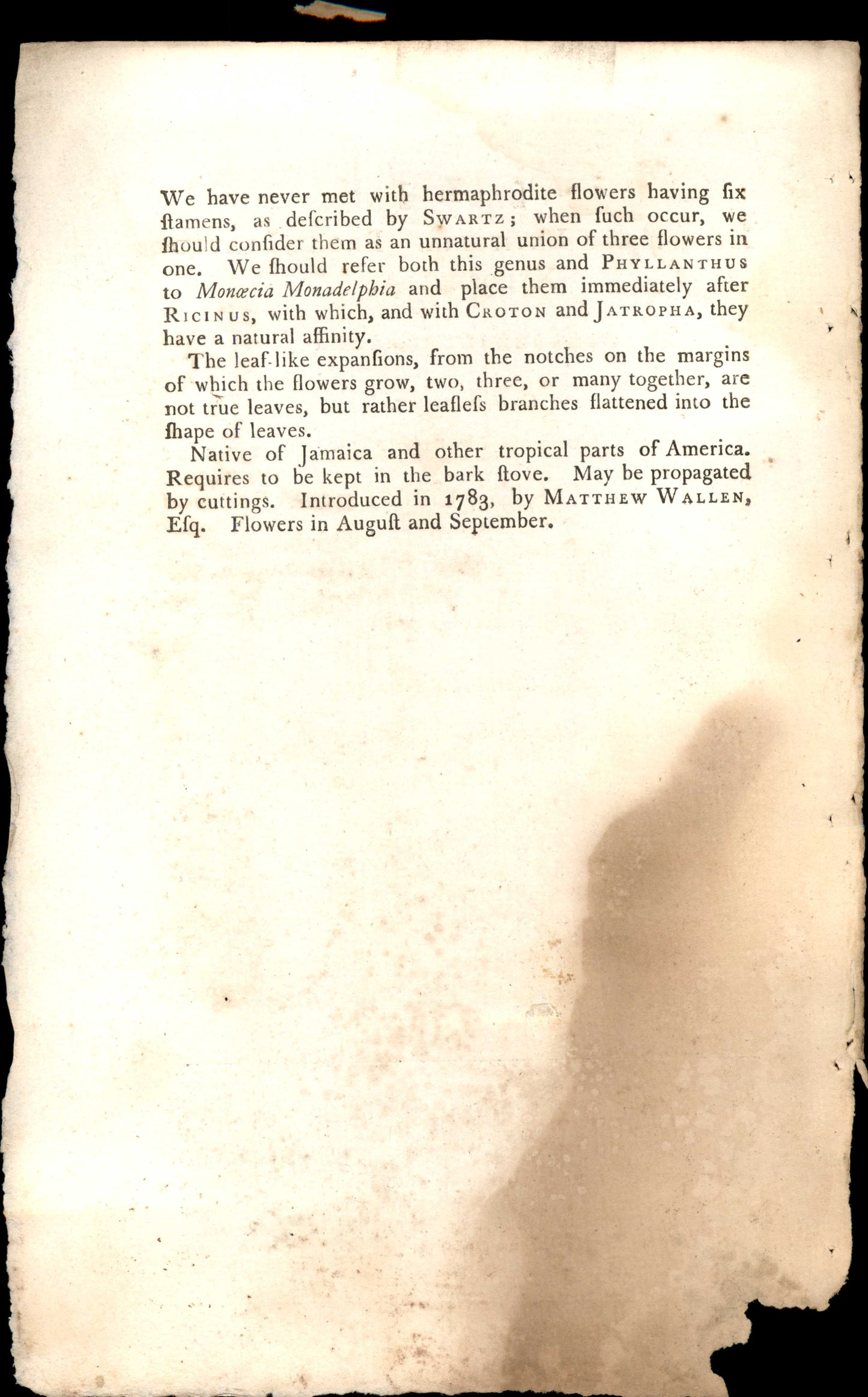
It seems hardly to be a distinct genus from PHYLLANTHUS. The female flowers stand on much longer footstalks than the male. We
This is an original plate from leftover publisher stock of Curtis's Botanical Magazine. It was never bound into a volume. This holding reached us through the British natural-history dealer Wheldon & Wesley. Sold as an original historic plate — please review photos for condition.
Share