Curtis Botanical Magazine
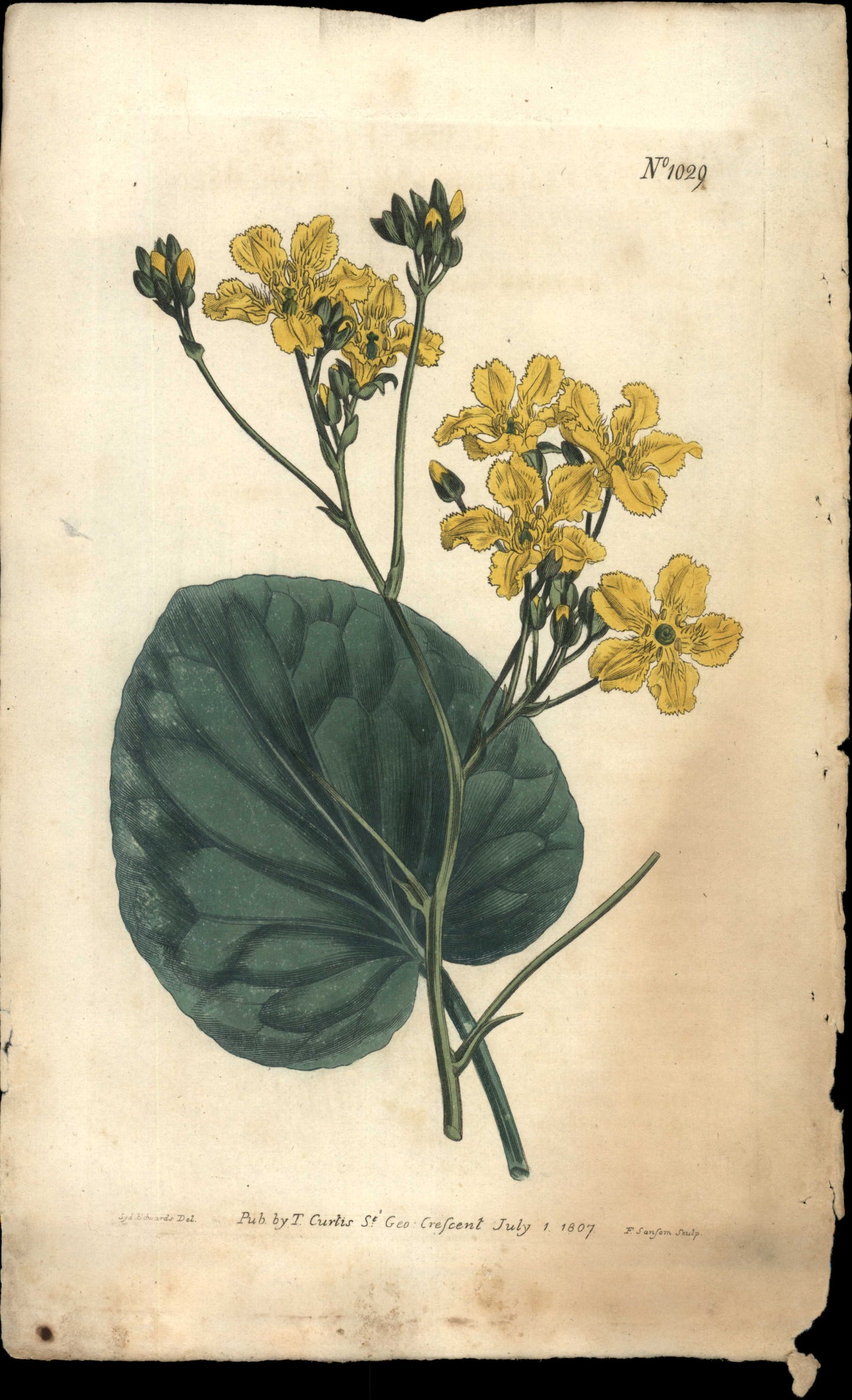
Curtis Botanical Magazine Plate 1029 - Menyanthes exaltata (Tall Buck-Bean) | Original Hand-Colored Print
Curtis Botanical Magazine Plate 1029 - Menyanthes exaltata (Tall Buck-Bean) | Original Hand-Colored Print
Couldn't load pickup availability
Original hand-colored antique botanical print from Curtis's Botanical Magazine - Plate 1029, Menyanthes exaltata (Tall Buck-Bean).
- Plate: 1029
- Latin name: Menyanthes exaltata
- Common name: Tall Buck-Bean
- Native region: New South-Wales
- Linnaean class / order: Pentandria / Monogynia
- Publication: July
- Medium: Original hand-colored engraving (physical print, not a reproduction)
Original Curtis text
Transcribed from the plate's accompanying description page:
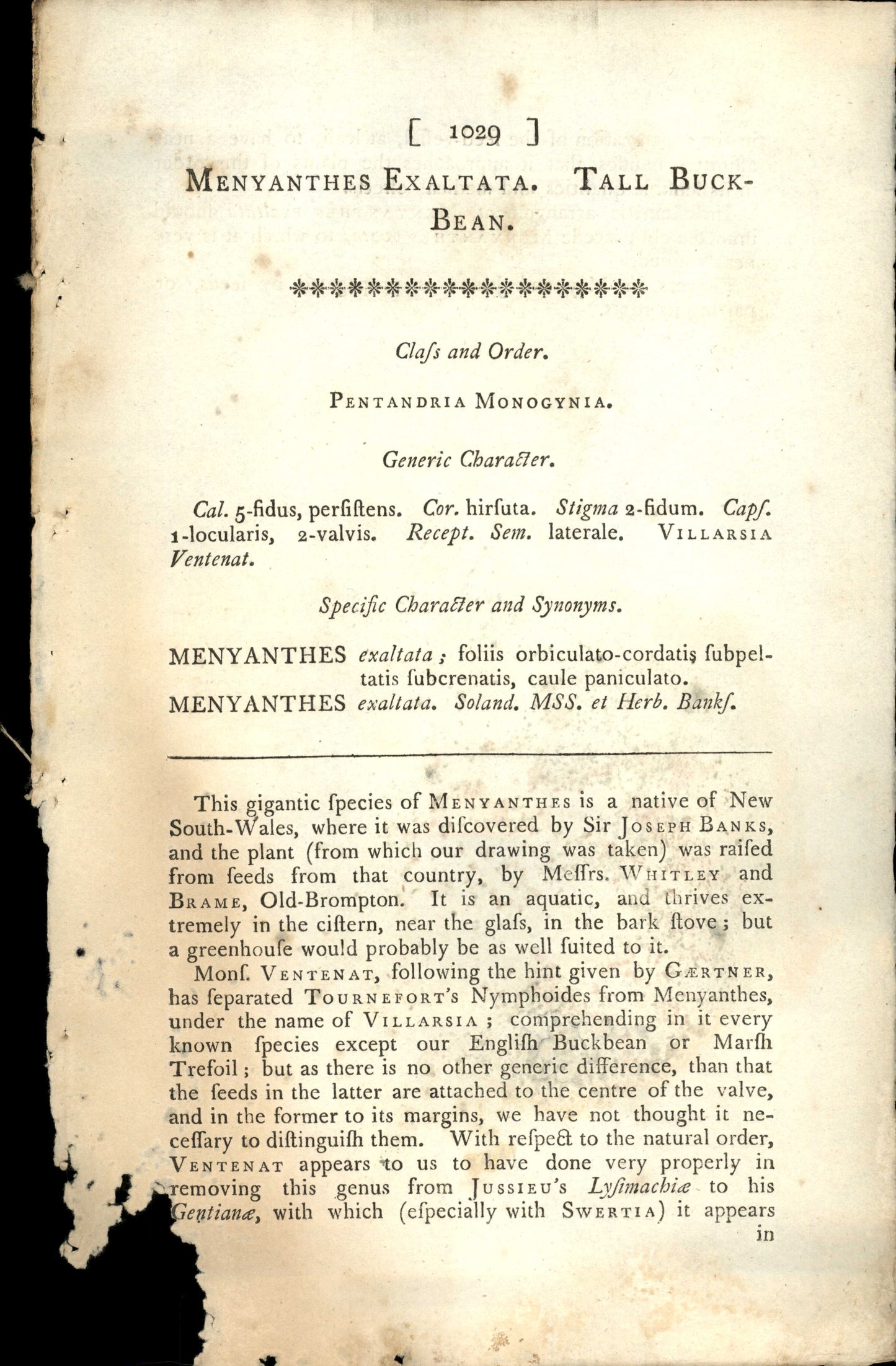
[ 1029 ]
MENYANTHES EXALTATA. TALL BUCK-BEAN.
. . .
Class and Order.
PENTANDRIA MONOGYNIA.
Generic Character.
Cal. 5-fidus, perfiflens. Cor. hirfuta. Stigma 2-fidum. Capl. 1-locularis, 2-valvis. Recept. Sem. laterale. VILLARSIA Ventenat.
Specific Character and Synonyms.
MENYANTHES exaltata; foliis orbiculato-cordatis subpeltatis subcrenatis, caule paniculato. MENYANTHES exaltata. Soland. MSS. et Herb. Banksf. This gigantic species of MENYANTHES is a native of New South-Wales, where it was discovered by Sir JOSEPH BANKS, and the plant (from which our drawing was taken) was raised from seeds from that country, by Messrs. WHITLEY and BRAME, Old-Brompton.
It is an aquatic, and extremely in the cistern, near the glass, in the bark stove; but a greenhouse would probably be as well suited to it. Monf. VENTENAT, following the hint given by GAERTNER, has separated TOURNEFORT's Nymphoides from Menyanthes, under the name of VILLARSIA; comprehending in it every known species except our English Buckbean or Marsh Trefoil; but as there is no other generic difference, than that the seeds in the latter are attached to the centre of the valve, and in the former to its margins, we have not thought it necessary to distinguish them. With respect to the natural order, VENTENAT appears to us to have done very properly in removing this genus from JUSSIEU's Lymnachiæ to his Gentianæ, with which (especially with SWERTIA) it appears in
This is an original plate from leftover publisher stock of Curtis's Botanical Magazine. It was never bound into a volume. This holding reached us through the British natural-history dealer Wheldon & Wesley. Sold as an original historic plate — please review photos for condition.
Share