Curtis Botanical Magazine
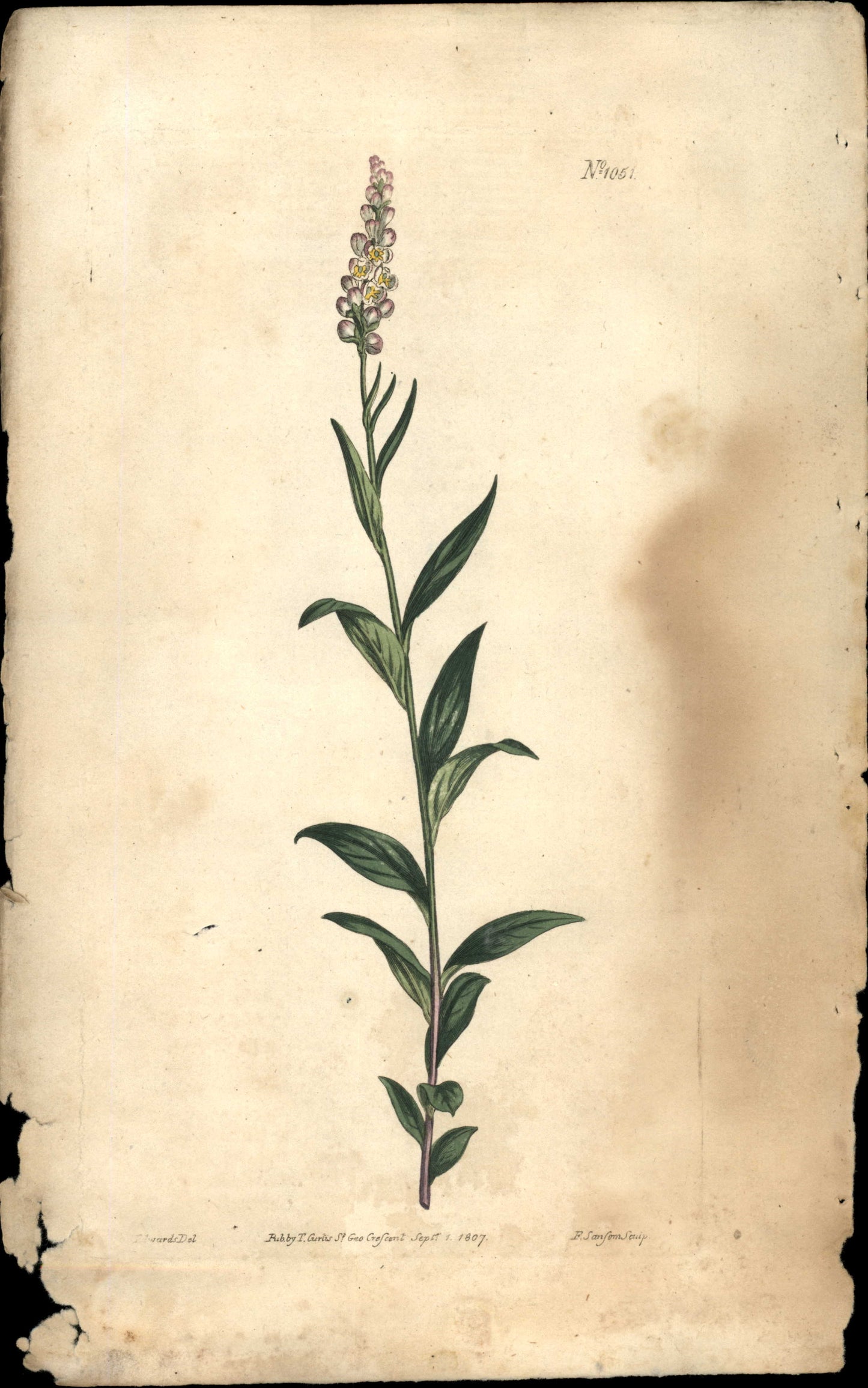
Curtis Botanical Magazine Plate 1051 - Polygala senega (Officinal Milkwort, or Rattle-Snake-Root) | Original Hand-Colored Print
Curtis Botanical Magazine Plate 1051 - Polygala senega (Officinal Milkwort, or Rattle-Snake-Root) | Original Hand-Colored Print
Couldn't load pickup availability
Original hand-colored antique botanical print from Curtis's Botanical Magazine - Plate 1051, Polygala senega (Officinal Milkwort, or Rattle-Snake-Root).
- Plate: 1051
- Latin name: Polygala senega
- Common name: Officinal Milkwort, or Rattle-Snake-Root
- Native region: America
- Linnaean class / order: Diadelphia / Octandria
- Publication: July 1, 1807
- Engraver: F. Sansom
- Medium: Original hand-colored engraving (physical print, not a reproduction)
Original Curtis text
Transcribed from the plate's accompanying description page:
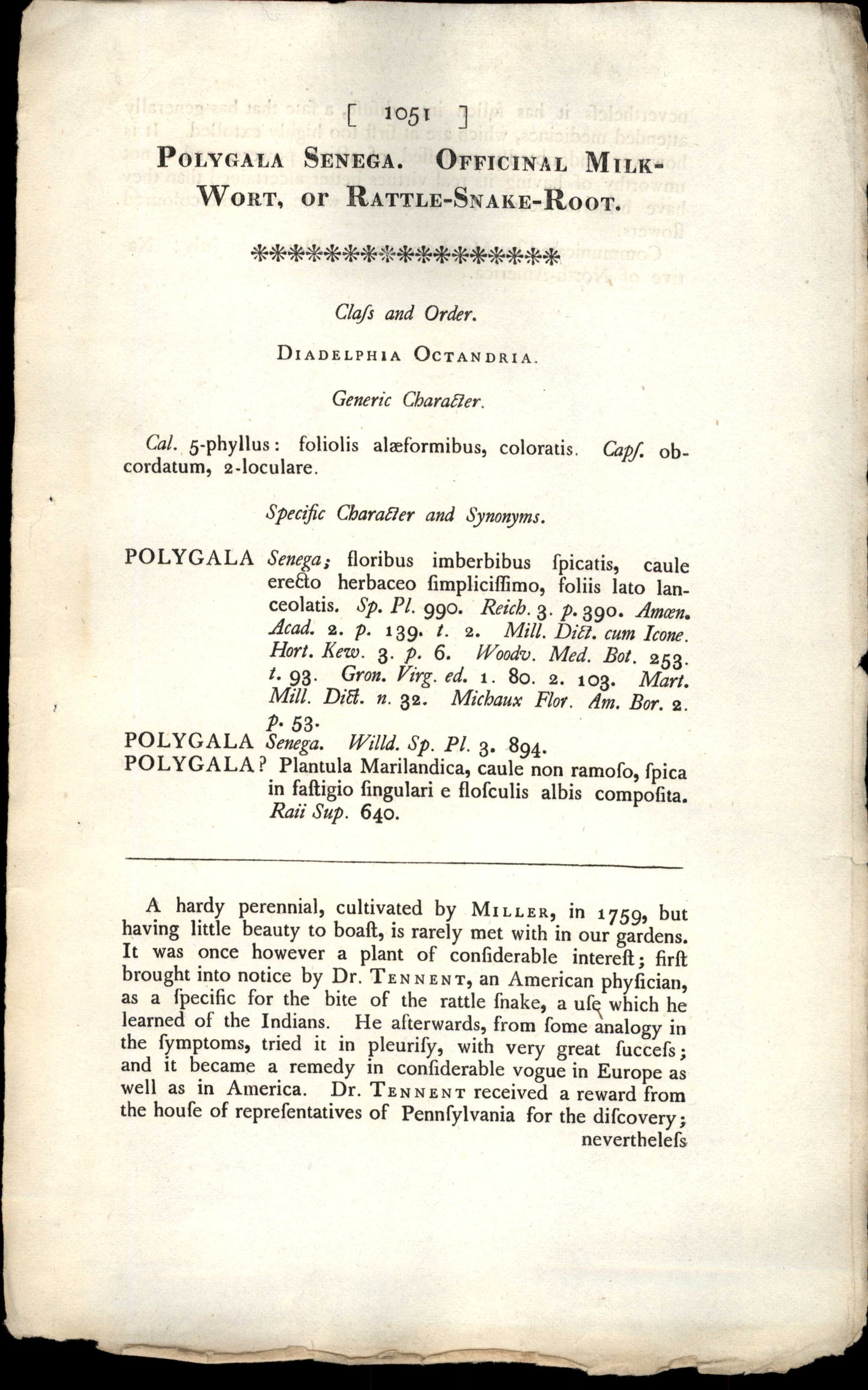
[ 1051 ]
POLYGALA SENEGA. OFFICINAL MILKWORT, OR RATTLE-SNAKE-ROOT.
. . .
Class and Order.
DIADELPHIA OCTANDRIA.
Generic Character.
Cal. 5-phyllus: foliolis alæformibus, coloratis. Capf. obcordatum, 2-loculare.
Specific Character and Synonyms.
POLYGALA Senega: floribus imberbibus spicatis, caule erecto herbaceo simplicissimo, foliis lato lanceolatis. Sp. Pl. 990. Reichb. 3. p. 390. Aman. Acad. 2. p. 139. t. 2. Mill. Dict. cum Icone. Hort. Kew. 3. p. 6. Woodv. Med. Bot. 253. t. 93. Gron. Virg. ed. 1. 80. 2. 103. Mart. Mill. Dict. n. 32. Michaux Flor. Am. Bor. 2. p. 53. POLYGALA Senega. Willd. Sp. Pl. 3. 894. POLYGALA? Plantula Marylandica, caule non ramofo, spica in fastigio fingulari e flosculis albis composita. Raii Sup. 640. A hardy perennial, cultivated by MILLER, in 1759, but having little beauty to boast, is rarely met with in our gardens.
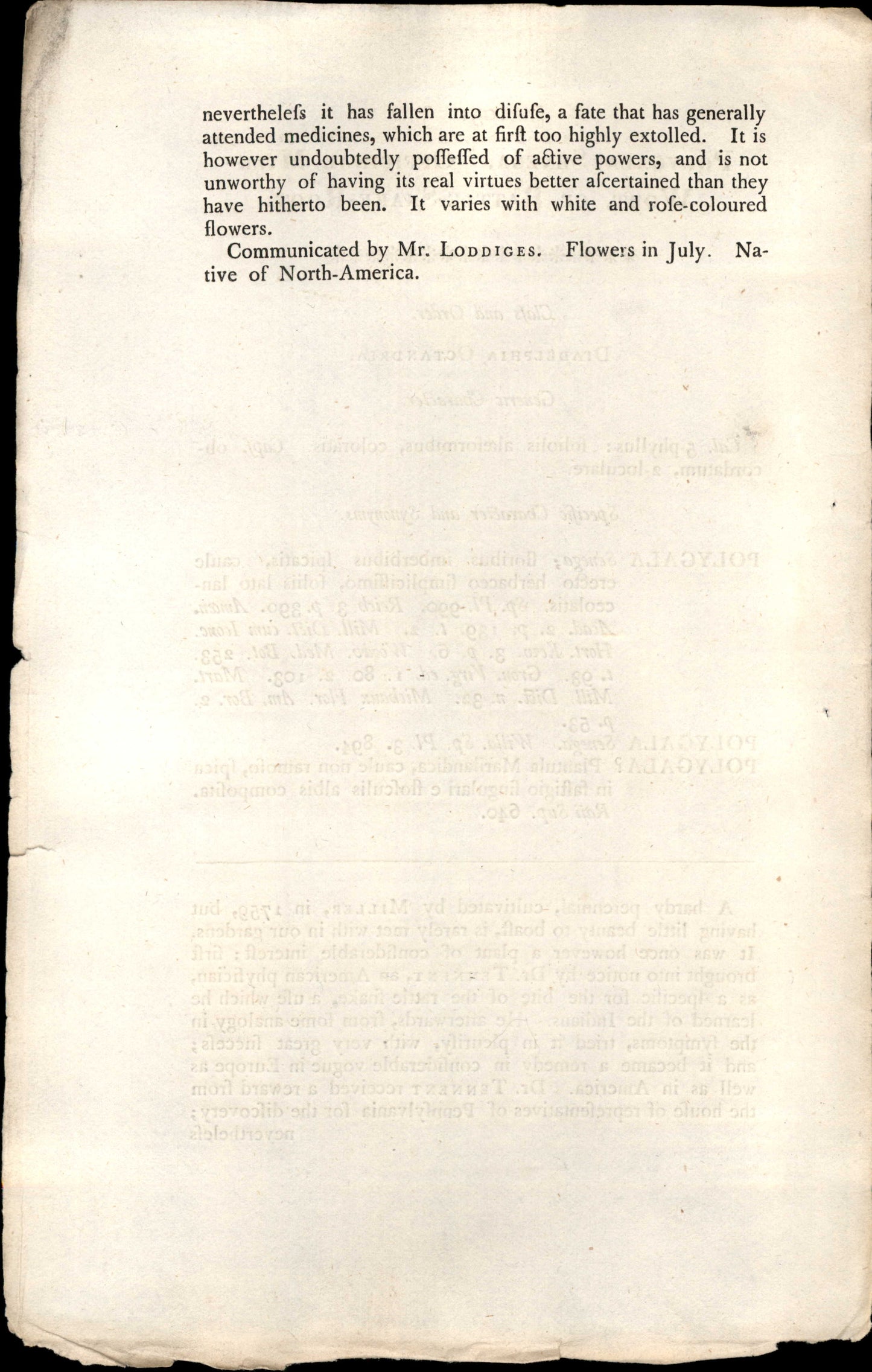
It was once however a plant of considerable interest; first brought into notice by Dr. TENNENT, an American physician, as a specific for the bite of the rattle-snake, a use which he learned of the Indians. He afterwards, from some analogy in the symptoms, tried it in pleurisy, with very great success; and it became a remedy in considerable vogue in Europe as well as in America. Dr. TENNENT received a reward from the house of representatives of Pennsylvania for the discovery; nevertheless
This is an original plate from leftover publisher stock of Curtis's Botanical Magazine. It was never bound into a volume. This holding reached us through the British natural-history dealer Wheldon & Wesley. Sold as an original historic plate — please review photos for condition.
Share