Curtis Botanical Magazine
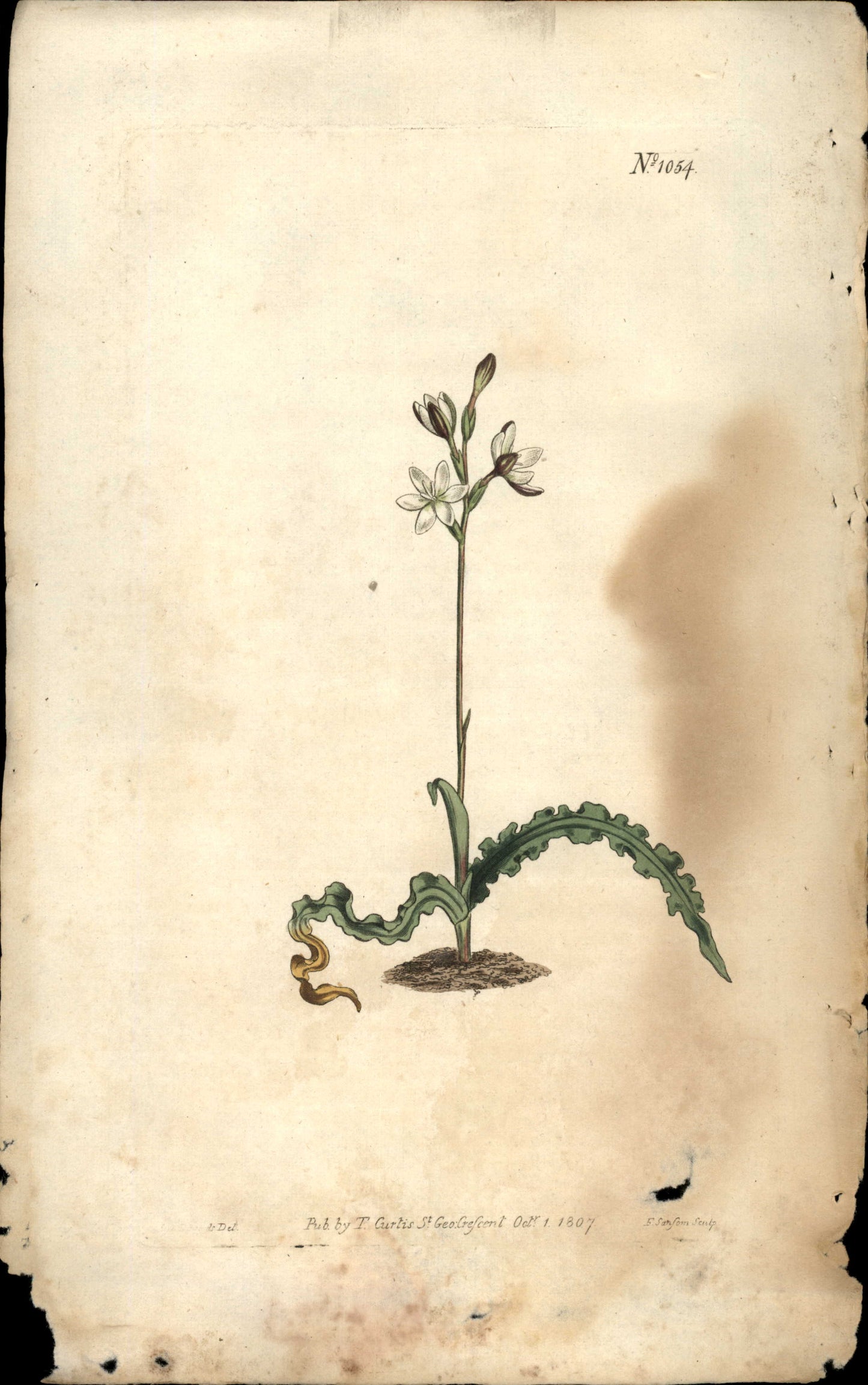
Curtis Botanical Magazine Plate 1054 - Hesperantha cinnamomea (The Cinnamon Evening-Flower) | Original Hand-Colored Print
Curtis Botanical Magazine Plate 1054 - Hesperantha cinnamomea (The Cinnamon Evening-Flower) | Original Hand-Colored Print
Couldn't load pickup availability
Original hand-colored antique botanical print from Curtis's Botanical Magazine - Plate 1054, Hesperantha cinnamomea (The Cinnamon Evening-Flower).
- Plate: 1054
- Latin name: Hesperantha cinnamomea
- Common name: The Cinnamon Evening-Flower
- Native region: Cape of Good Hope
- Linnaean class / order: Hexandria / Monogynia
- Medium: Original hand-colored engraving (physical print, not a reproduction)
Original Curtis text
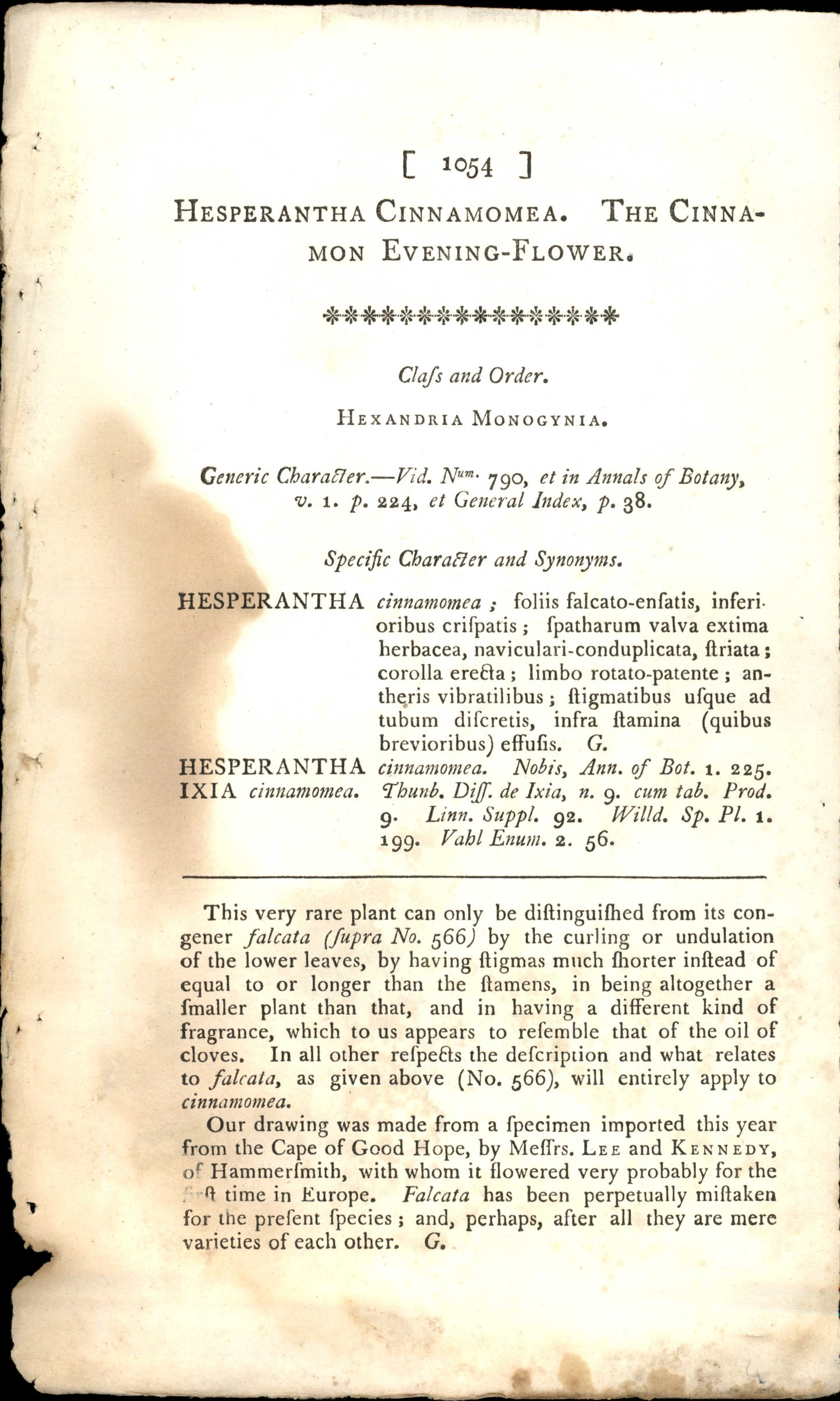
Transcribed from the plate's accompanying description page:
[ 1054 ]
HESPERANTHA CINNAMOMEA. THE CINNAMON EVENING-FLOWER.
. . .
Class and Order.
HEXANDRIA MONOGYNIA.
Generic Character.
—Vid. Num. 790, et in Annals of Botany, v. 1. p. 224, et General Index, p. 38.
Specific Character and Synonyms.
HESPERANTHA cinnamomea; foliis falcato-ensatis, inferioribus crispatis; spatharum valva extima herbacea, naviculari-conduplicata, striata; corolla erecta; limbo rotato-patente; antheris vibratilibus; stigmatibus ufque ad tubum discretis, infra stamina (quibus brevioribus) effusis. G. HESPERANTHA cinnamomea. Nobis, Ann. of Bot. 1. 225. IXIA cinnamomea. Thunb. Diff. de Ixia, n. 9. cum tab. Prod. Linn. 9. Linn. Suppl. 92. Willd. Sp. Pl. 1. 199. Vahl Enum. 2. 56. This very rare plant can only be distinguished from its congener falcata (supra No. 566) by the curling or undulation of the lower leaves, by having stigmas much shorter instead of equal to or longer than the stamens, in being altogether a smaller plant than that, and in having a different kind of fragrance, which to us appears to resemble that of the oil of cloves. In all other respects the description and what relates to falcata, as given above (No. 566), will entirely apply to cinnamomea. Our drawing was made from a specimen imported this year from the Cape of Good Hope, by Messrs. LEE and KENNEDY, of Hammersmith, with whom it flowered very probably for the first time in Europe. Falcata has been perpetually mistaken for the present species; and, perhaps, after all they are mere varieties of each other. G.
This is an original plate from leftover publisher stock of Curtis's Botanical Magazine. It was never bound into a volume. This holding reached us through the British natural-history dealer Wheldon & Wesley. Sold as an original historic plate — please review photos for condition.
Share