Curtis Botanical Magazine
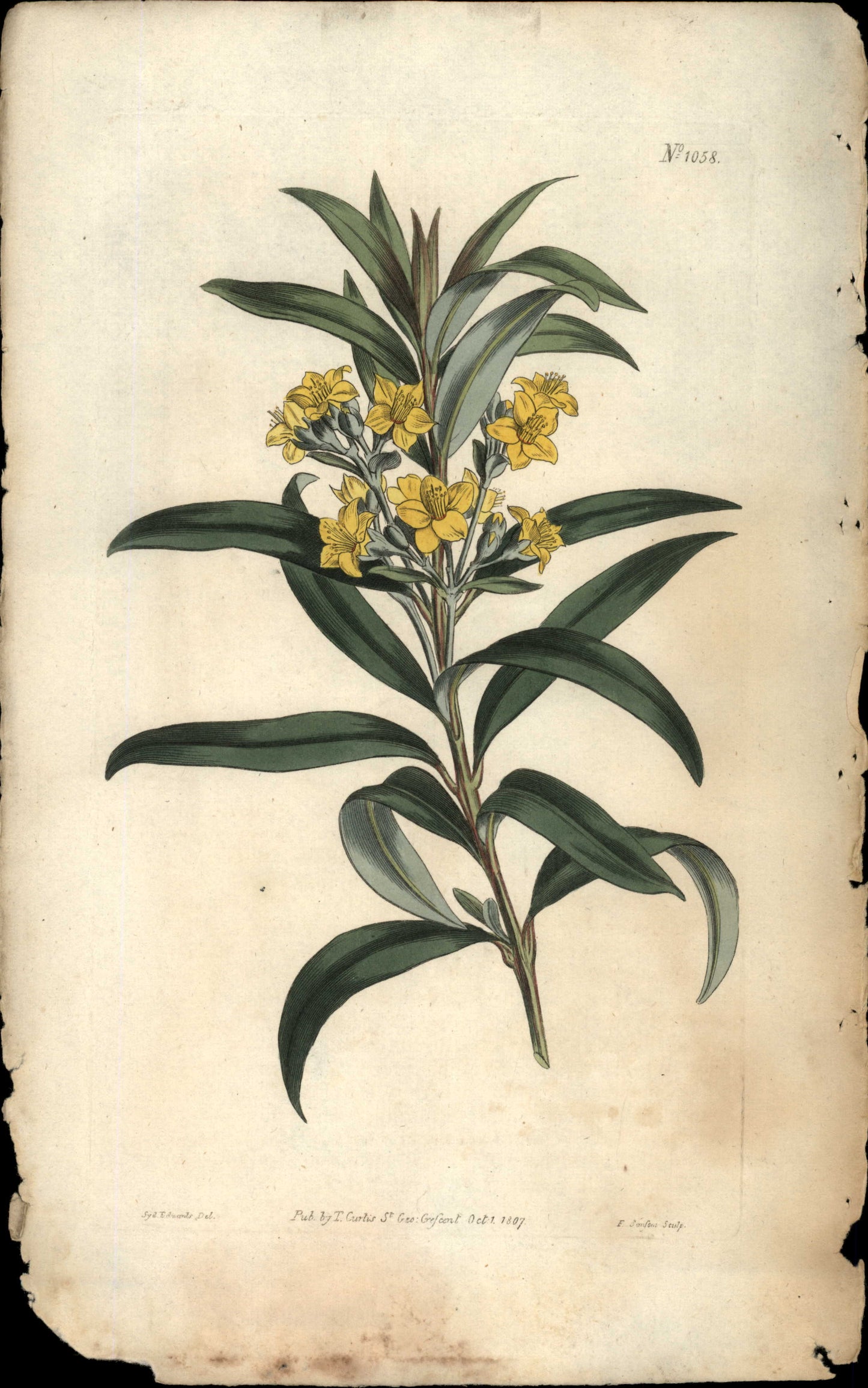
Curtis Botanical Magazine Plate 1058 - Melaleuca nerifolia (Oleander-leaved Melaleuca) | Original Hand-Colored Print
Curtis Botanical Magazine Plate 1058 - Melaleuca nerifolia (Oleander-leaved Melaleuca) | Original Hand-Colored Print
Couldn't load pickup availability
Original hand-colored antique botanical print from Curtis's Botanical Magazine - Plate 1058, Melaleuca nerifolia (Oleander-leaved Melaleuca).
- Plate: 1058
- Latin name: Melaleuca nerifolia
- Common name: Oleander-leaved Melaleuca
- Flower colour: Yellow
- Linnaean class / order: Polyadelphia / Polyandria
- Medium: Original hand-colored engraving (physical print, not a reproduction)
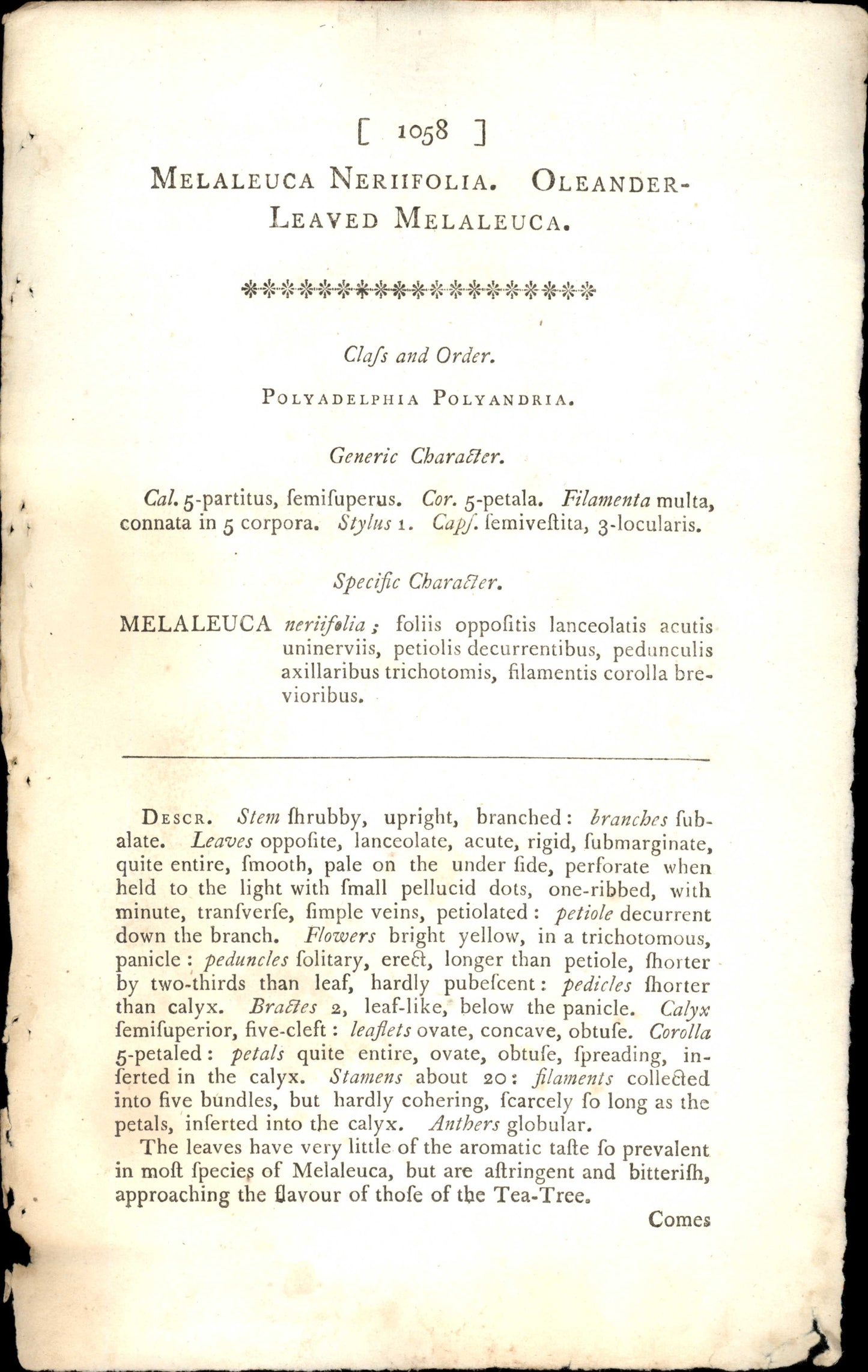
Original Curtis text
Transcribed from the plate's accompanying description page:
[ 1058 ]
MELALEUCA NERIFOLIA. OLEANDER-LEAVED MELALEUCA.
. . .
Class and Order.
POLYADELPHIA POLYANDRIA.
Generic Character.
Cal. 5-partitus, semifuperus. Cor. 5-petala. Filamenta multa, connata in 5 corpora. Stylus 1. Caps. lemivestita, 3-locularis.
Specific Character.
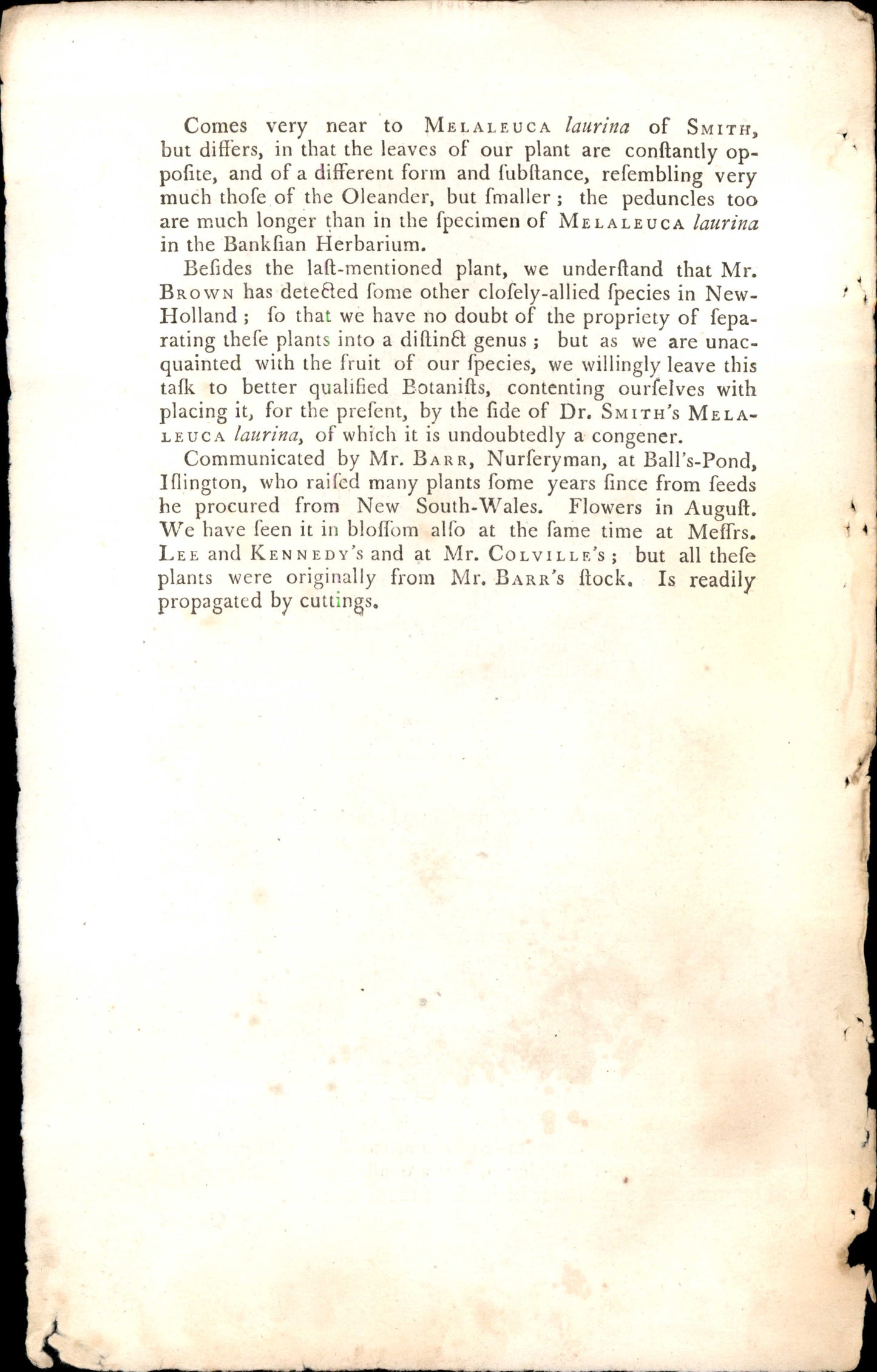
MELALEUCA nerifolia; foliis oppositis lanceolatis acutis uninervius, petiolls decurrentibus, pedunculis axillaribus trichotomis, filamentis corolla brevioribus. DESCR. Stem shrubby, upright, branched: branches subalate. Leaves opposite, lanceolate, acute, rigid, submarginate, quite entire, smooth, pale on the under side, perforate when held to the light with small pellucid dots, one-ribbed, with minute, tranverse, simple veins, petiolated: petiole decurrent down the branch. Flowers bright yellow, in a trichotomous, panicle; peduncles folitary, erect, longer than petiole, shorter by two-thirds than leaf, hardly pubescent: pedicles shorter than calyx. Bracts 2, leaf-like, below the panicle. Calyx femisuperior, five-cleft: leaflets ovate, concave, obtuse. Corolla 5-petaled: petals quite entire, ovate, obtuse, spreading, inferted in the calyx. Stamens about 20: filaments collected into five bundles, but hardly cohering, scarcely so long as the petals, inferted into the calyx. Anthers globular. The leaves have very little of the aromatic taste so prevalent in most species of Melaleuca, but are astringent and bitterish, approaching the flavour of those of the Tea-Tree. Comes
**** **** **** **** **** **** **** **** **** **** **** **** **** **** **** **** ****
This is an original plate from leftover publisher stock of Curtis's Botanical Magazine. It was never bound into a volume. This holding reached us through the British natural-history dealer Wheldon & Wesley. Sold as an original historic plate — please review photos for condition.
Share