Curtis Botanical Magazine
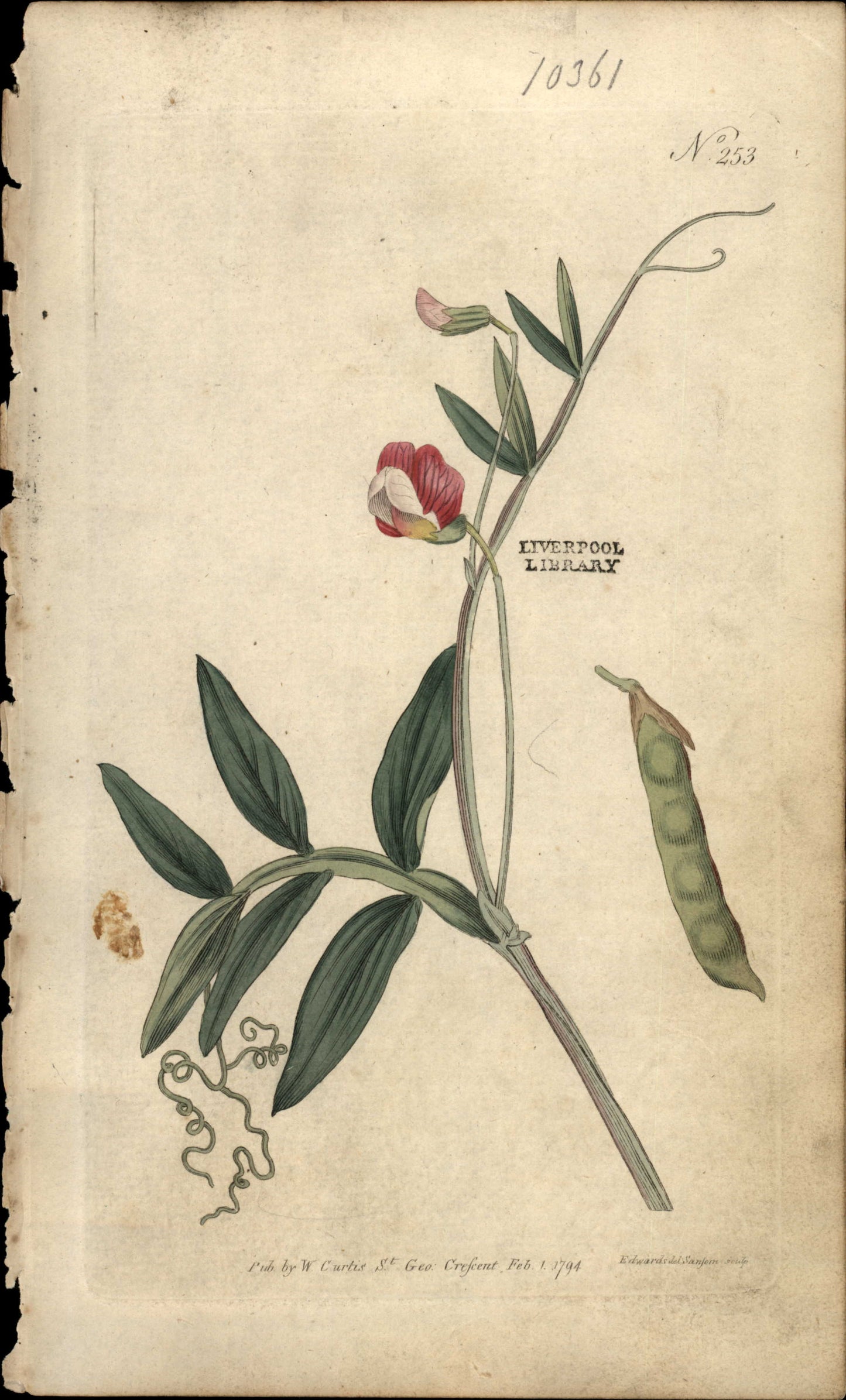
Curtis Botanical Magazine Plate 253 - Lathyrus articulatus (Jointed-podded Lathyrus) | Original Hand-Colored Print
Curtis Botanical Magazine Plate 253 - Lathyrus articulatus (Jointed-podded Lathyrus) | Original Hand-Colored Print
Couldn't load pickup availability
Original hand-colored antique botanical print from Curtis's Botanical Magazine - Plate 253, Lathyrus articulatus (Jointed-podded Lathyrus).
- Plate: 253
- Latin name: Lathyrus articulatus
- Common name: Jointed-podded Lathyrus
- Native region: Italy
- Flowering: July and August
- Flower colour: Red
- Linnaean class / order: Diadelphia / Decandria
- Publication: Feb. 1, 1804
- Artist: Edwards
- Engraver: Sansom
- Medium: Original hand-colored engraving (physical print, not a reproduction)
Original Curtis text
Transcribed from the plate's accompanying description page:
[ 253 ]
LATHYRUS ARTICULATUS. JOINTED-PODDED LATHYRUS.
. . .
Class and Order.
DIADELPHIA DECANDRIA.
Generic Character.
Stylus planus, supra villosus, superne latior. Cal. laciniæ superiores 2-breviores.
Specific Character and Synonyms.
LATHYRUS articulatus pedunculis subuniforis, cirrhis polyphyllis; foliolis alternis. Linn. Syst. Veg. ed. 14. Murr. p. 662. Ait. Kew. v. 2. p. 41. CLYMENUM hispanicum, flore vario, filiquia articulata. Tourn. Inst. 396. LATHYRUS hispanicus, pedunculis biloris, cirrhis polyphyllis foliolis alternis. Mill. Dict. ed. 6. 4to. The feed-vessels are of the first importance in afcertaining the feveral fpecies of Lathyrus, fome being naked, others hairy, fome long, others short, fome having a fmooth and perfectly even furface, others, as in the prefent infance, affuming an uneven or jointed appearance. Of this genus we have already figured three annual fpecies, common in flower-gardens, viz. odoratus, tingilanus, and sativus; to thefe we now add the articulatus, not altogether fo frequently met with, but meriting a place on the flower-border, as the lively red and delicate white fo confpicuous in its bloffoms, caufes it to be much admired.
It is a native of Italy, and was cultivated at the Chelfea Garden, in the time of Mr. RAND, anno 1739. It is a hardy annual, requiring fupport, and rarely exceeding the height of two feet, flowering in July and Auguft, and is readily raifed from feeds, which fhould be fown in the open border at the beginning of April.
This is an original plate from leftover publisher stock of Curtis's Botanical Magazine. It was never bound into a volume. This holding reached us through the British natural-history dealer Wheldon & Wesley. Sold as an original historic plate — please review photos for condition.
Share