Curtis Botanical Magazine
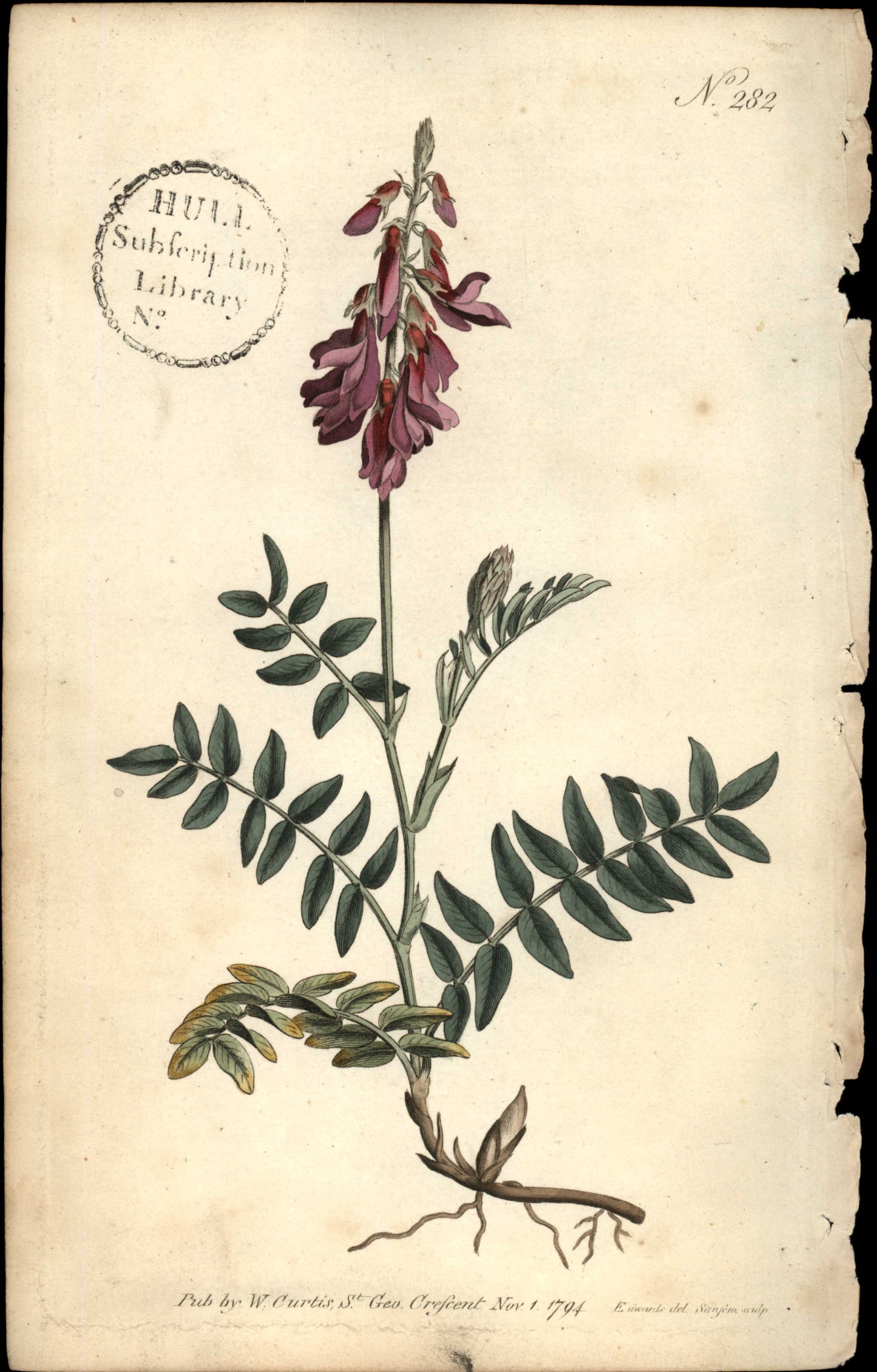
Curtis Botanical Magazine Plate 282 - Hedysarum obscurum (Creeping-rooted Hedysarum) | Original Hand-Colored Print
Curtis Botanical Magazine Plate 282 - Hedysarum obscurum (Creeping-rooted Hedysarum) | Original Hand-Colored Print
Couldn't load pickup availability
Original hand-colored antique botanical print from Curtis's Botanical Magazine - Plate 282, Hedysarum obscurum (Creeping-rooted Hedysarum).
- Plate: 282
- Latin name: Hedysarum obscurum
- Common name: Creeping-rooted Hedysarum
- Native region: Alps of Germany and Switzerland
- Flowering: July and August
- Flower colour: Purple
- Linnaean class / order: Diadelphia / Decandria
- Publication: Nov. 1 1791
- Artist: Engraved del.
- Engraver: Syngriph sculp.
- Medium: Original hand-colored engraving (physical print, not a reproduction)
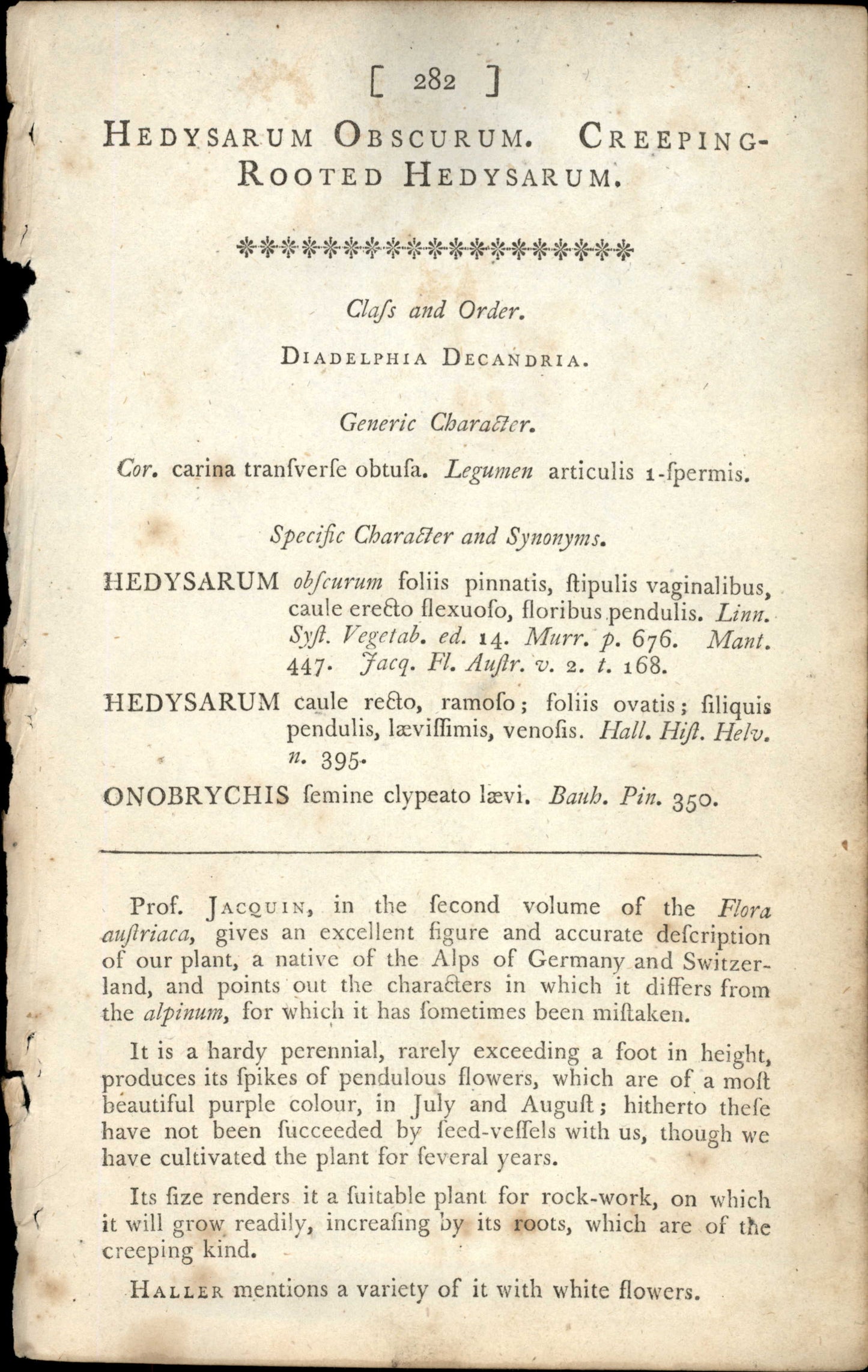
Original Curtis text
Transcribed from the plate's accompanying description page:
[ 282 ]
HEDYSARUM OBSCURUM. CREEPING-ROOTED HEDYSARUM.
. . .
Class and Order.
DIADELPHIA DECANDRIA.
Generic Character.
Cor. carina transverse obtusa. Legumen articulis 1-spermis.
Specific Character and Synonyms.
HEDYSARUM obscurum foliis pinnatis, stipulis vaginalibus, caule erecto flexuoso, floribus pendulis. Linn. Syst. Vegetab. ed. 14. Murr. p. 676. Mant. 447. Jacq. Fl. Austr. v. 2. t. 168. HEDYSARUM caule recto, ramoso; foliis ovatis; filiquis pendulis, lævissimis, venosis. Hall. Hist. Helv. n. 395. ONOBRYCHIS feminine clypeato lavi. Baub. Pin. 350. Prof. Jacquin, in the second volume of the Flora austriaca, gives an excellent figure and accurate description of our plant, a native of the Alps of Germany and Switzerland, and points out the characters in which it differs from the alpinum, for which it has sometimes been mistaken.
It is a hardy perennial, rarely exceeding a foot in height, produces its spikes of pendulous flowers, which are of a most beautiful purple colour, in July and August; hitherto these have not been succeeded by feed-vessels with us, though we have cultivated the plant for several years. Its fize renders it a suitable plant for rock-work, on which it will grow readily, increasing by its roots, which are of the creeping kind. Haller mentions a variety of it with white flowers.
❋❋❋❋❋❋❋❋❋❋❋❋❋❋❋❋❋❋
This is an original plate from leftover publisher stock of Curtis's Botanical Magazine. It was never bound into a volume. This holding reached us through the British natural-history dealer Wheldon & Wesley. Sold as an original historic plate — please review photos for condition.
Share