Curtis Botanical Magazine
Curtis Botanical Magazine Plate 285 - Jasminum odoratissimum (Sweetest Jasmine) | Original Hand-Colored Print
Curtis Botanical Magazine Plate 285 - Jasminum odoratissimum (Sweetest Jasmine) | Original Hand-Colored Print
Couldn't load pickup availability
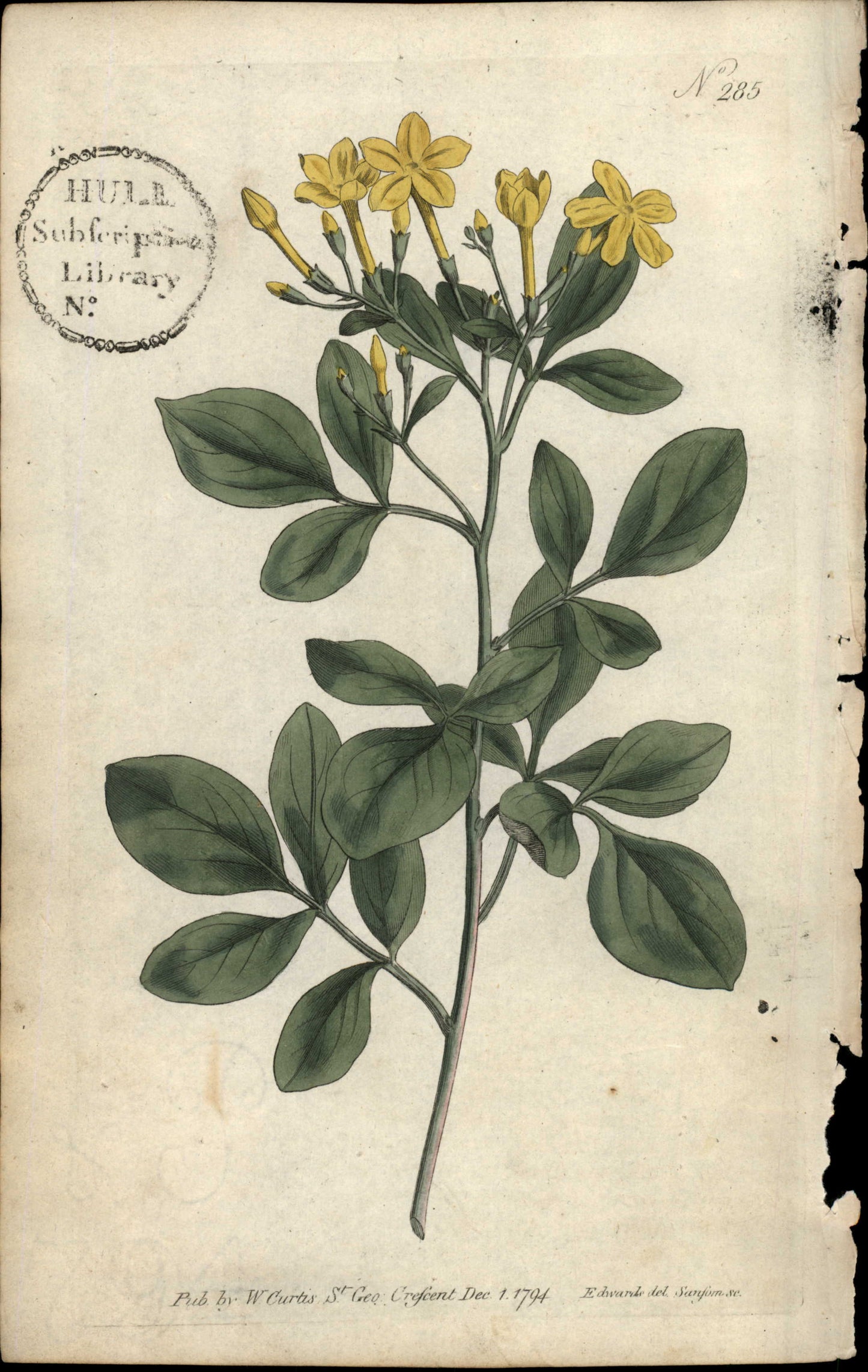
Original hand-colored antique botanical print from Curtis's Botanical Magazine - Plate 285, Jasminum odoratissimum (Sweetest Jasmine).
- Plate: 285
- Latin name: Jasminum odoratissimum
- Common name: Sweetest Jasmine
- Native region: Madeira
- Flowering: May to November
- Flower colour: Yellow
- Linnaean class / order: Diandria / Monogynia
- Medium: Original hand-colored engraving (physical print, not a reproduction)
Original Curtis text
Transcribed from the plate's accompanying description page:
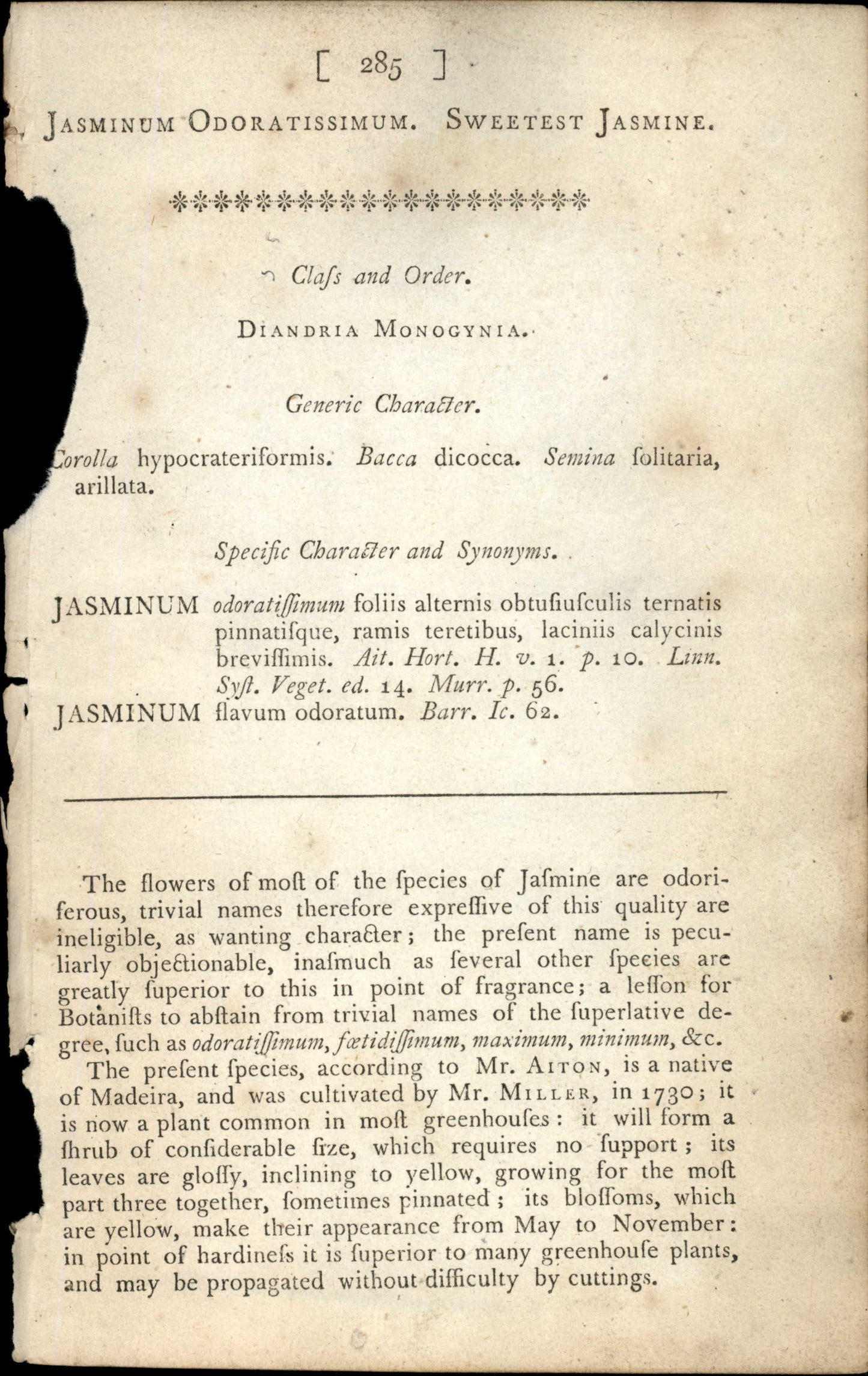
[ 285 ]
JASMINUM ODORATISSIMUM. SWEETEST JASMINE.
. . .
Class and Order.
DIANDRIA MONOGYNIA.
Generic Character.
Corolla hypocrateriformis. Bucca diocca. Semina folitaria, arillata.
Specific Character and Synonyms.
JASMINUM odoratissimum foliis alternis obtusiufculis ternatis pinnatifque, ramis teretibus, laciniis calycinis brevissimis. Alt. Hort. H. v. 1. p. 10. Linn. Syst. Veget. ed. 14. Murr. p. 56. JASMINUM flavum odoratum. Barr. Ic. 62. The flowers of most of the species of Jasmine are odoriferous, trivial names therefore expressive of this quality are ineligible, as wanting character; the present name is peculiarly objectionable, inasmuch as several other species are greatly superior to this in point of fragrance; a lesson for Botanists to abstain from trivial names of the superlative degree, such as odoratissimum, fortissimum, maximum, minimum, &c. The present species, according to Mr. Aiton, is a native of Madeira, and was cultivated by Mr. Miller, in 1730; it is now a plant common in most greenhouses: it will form a shrub of considerable size, which requires no support; its leaves are glossy, inclining to yellow, growing for the most part three together, sometimes pinnated; its blossoms, which are yellow, make their appearance from May to November: in point of hardiness it is superior to many greenhouse plants, and may be propagated without difficulty by cuttings.
✳✳✳✳✳✳✳✳✳✳✳✳✳✳✳✳✳✳✳✳✳✳✳✳✳✳✳✳✳
This is an original plate from leftover publisher stock of Curtis's Botanical Magazine. It was never bound into a volume. This holding reached us through the British natural-history dealer Wheldon & Wesley. Sold as an original historic plate — please review photos for condition.
Share