Curtis Botanical Magazine
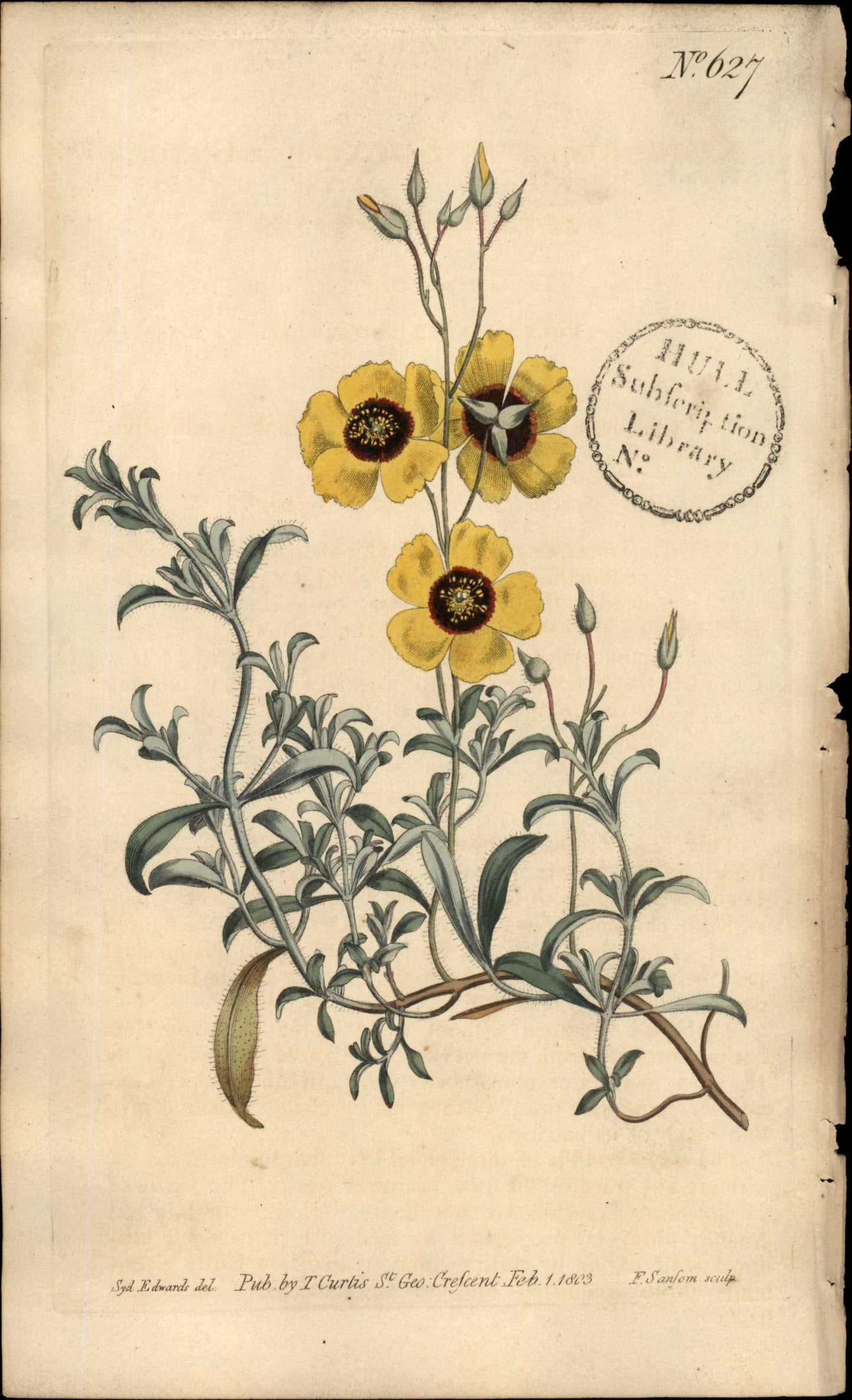
Curtis Botanical Magazine Plate 627 - Cistus algarvense (Algarve Cistus) | Original Hand-Colored Print
Curtis Botanical Magazine Plate 627 - Cistus algarvense (Algarve Cistus) | Original Hand-Colored Print
Couldn't load pickup availability
Original hand-colored antique botanical print from Curtis's Botanical Magazine - Plate 627, Cistus algarvense (Algarve Cistus).
- Plate: 627
- Latin name: Cistus algarvense
- Common name: Algarve Cistus
- Native region: Portugal, Algarve
- Flowering: July and August
- Flower colour: Yellow
- Linnaean class / order: Polyandria / Monogynia
- Medium: Original hand-colored engraving (physical print, not a reproduction)
Original Curtis text
Transcribed from the plate's accompanying description page:
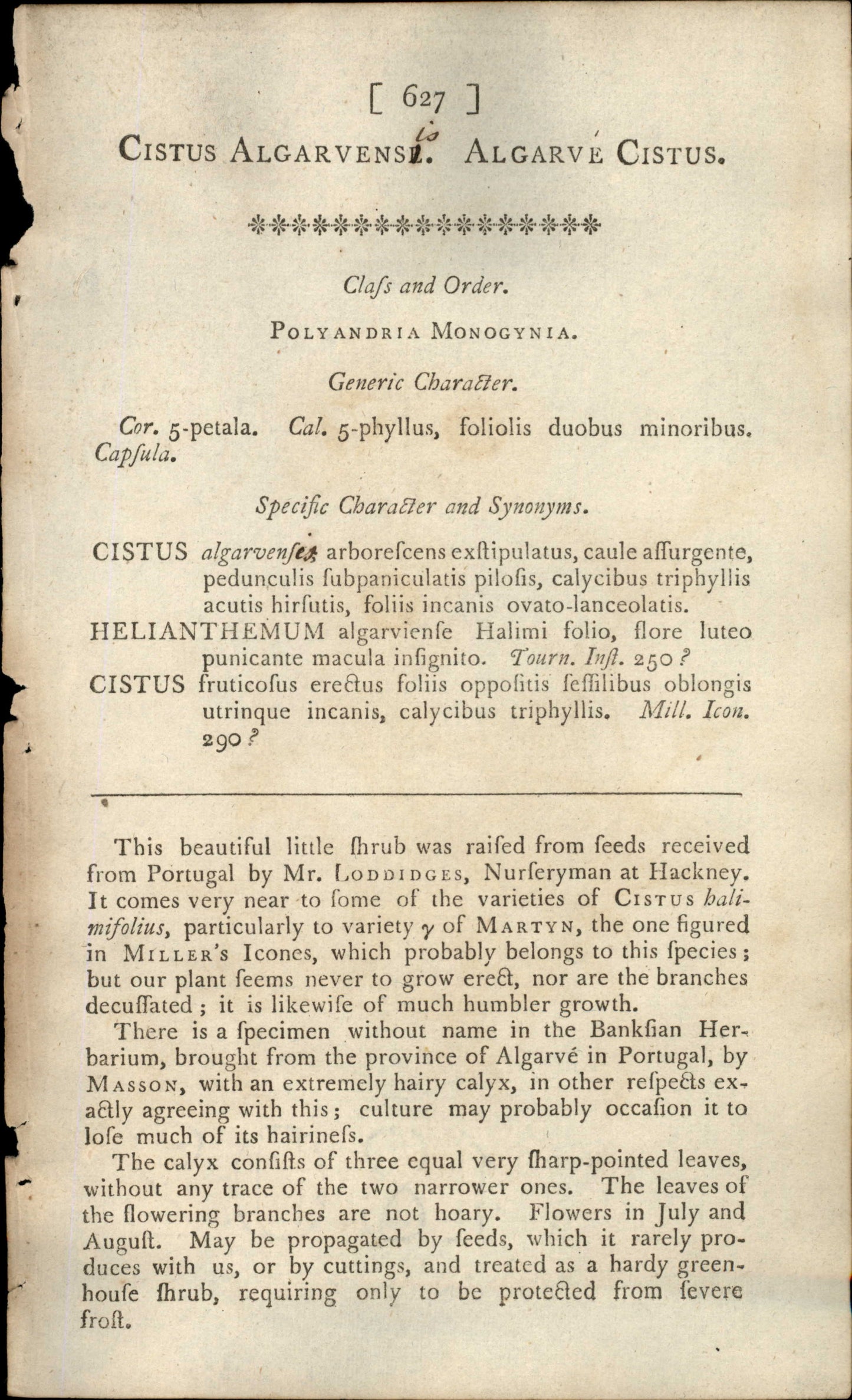
[ 627 ]
CISTUS ALGARVENSE. ALGARVE CISTUS.
. . .
Class and Order.
POLYANDRIA MONOGYNIA.
Generic Character.
Cor. 5-petala. Cal. 5-phyllus, foliolis duobus minoribus. Capsula.
Specific Character and Synonyms.
CISTUS algarvense; arborescens exstipulatus, caule affurgente, pedunculis subpaniculatis pilosis, calycibus triphyllis acutis hirsutis, foliis incanis ovato-lanceolatis. HELIANTHEMUM algarviense Halimi folio, flore luteo punicante macula insignito. Tourn. Inst. 250? CISTUS fruticosus erectus foliis oppositis sessilibus oblongis utrinque incanis, calycibus triphyllis. Mill. Icon. 290? This beautiful little shrub was raised from seeds received from Portugal by Mr. LODDIGES, Nurseryman at Hackney.
It comes very near to some of the varieties of CISTUS halimifolius, particularly to variety γ of MARTYN, the one figured in MILLER'S Icones, which probably belongs to this species; but our plant seems never to grow erect, nor are the branches decussated; it is likewise of much humbler growth. There is a specimen without name in the Banksian Herbarium, brought from the province of Algarve in Portugal, by MASSON, with an extremely hairy calyx, in other respects exactly agreeing with this; culture may probably occasion it to lose much of its hairiness. The calyx consists of three equal very sharp-pointed leaves, without any trace of the two narrower ones. The leaves of the flowering branches are not hoary. Flowers in July and August. May be propagated by seeds, which it rarely produces with us, or by cuttings, and treated as a hardy greenhouse shrub, requiring only to be protected from severe frost.
* * * * * * * * * * * * * * *
This is an original plate from leftover publisher stock of Curtis's Botanical Magazine. It was never bound into a volume. This holding reached us through the British natural-history dealer Wheldon & Wesley. Sold as an original historic plate — please review photos for condition.
Share