Curtis Botanical Magazine
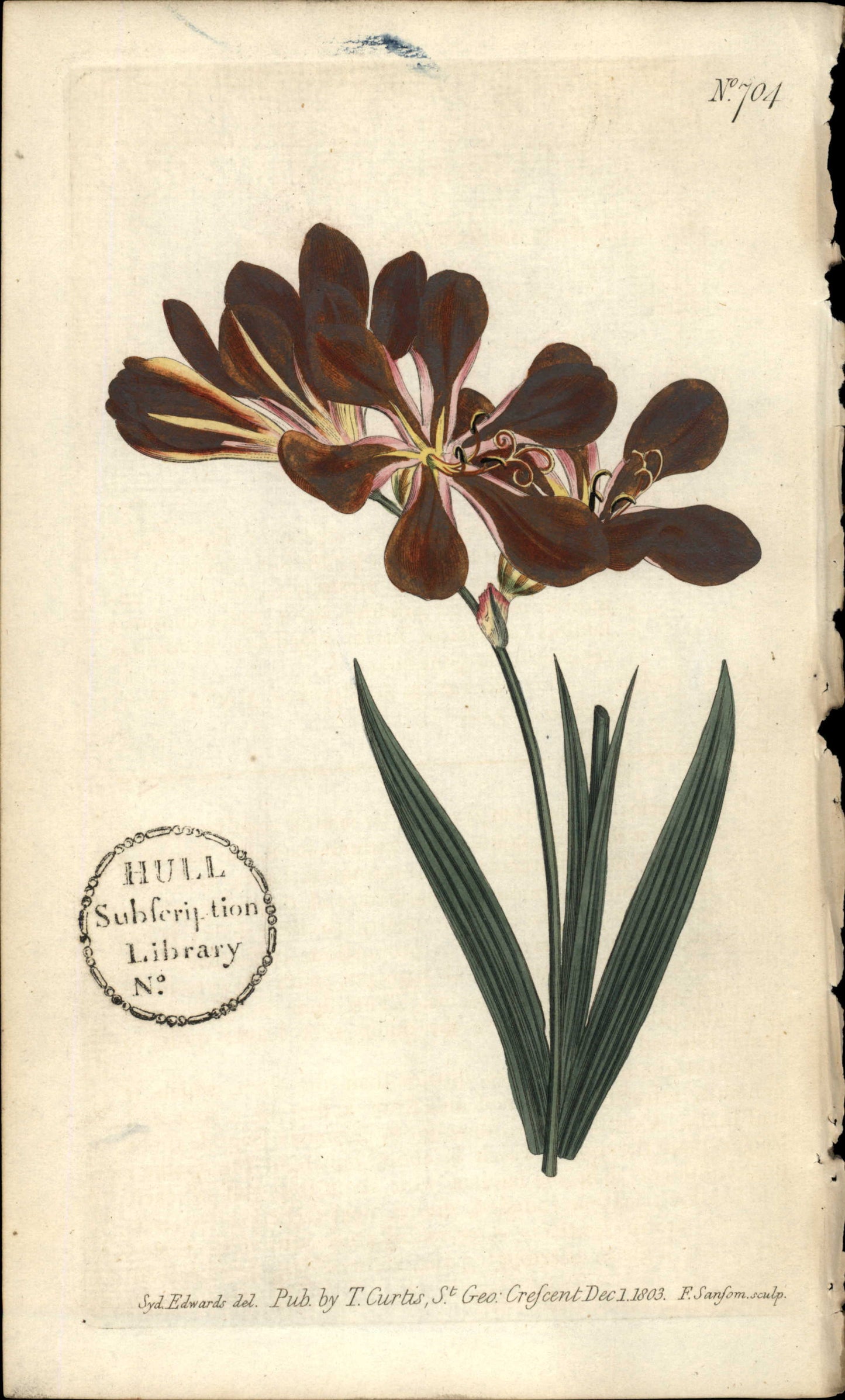
Curtis Botanical Magazine Plate 704 - Tritonia fenestrata (Open-flowered Tritonia) | Original Hand-Colored Print
Curtis Botanical Magazine Plate 704 - Tritonia fenestrata (Open-flowered Tritonia) | Original Hand-Colored Print
Couldn't load pickup availability
Original hand-colored antique botanical print from Curtis's Botanical Magazine - Plate 704, Tritonia fenestrata (Open-flowered Tritonia).
- Plate: 704
- Latin name: Tritonia fenestrata
- Common name: Open-flowered Tritonia
- Linnaean class / order: Triandria / Monogynia
- Publication: Dec 1, 1803
- Artist: Syd. Edwards
- Medium: Original hand-colored engraving (physical print, not a reproduction)
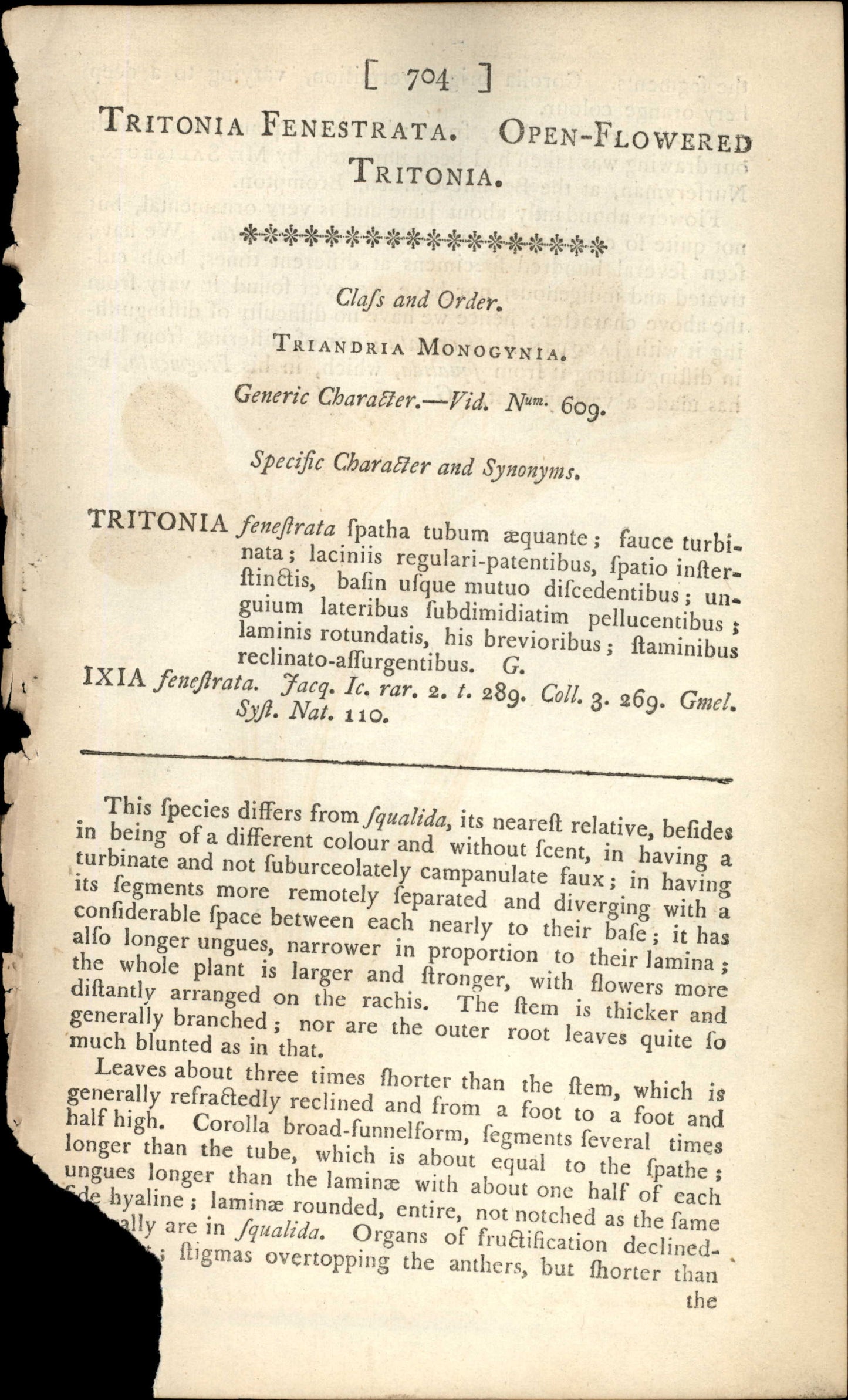
Original Curtis text
Transcribed from the plate's accompanying description page:
[ 704 ]
TRITONIA FENESTRATA. OPEN-FLOWERED TRITONIA.
. . .
Class and Order.
TRIANDRIA MONOGYNIA.
Generic Character.
—Vid. Num. 609.
Specific Character and Synonyms.
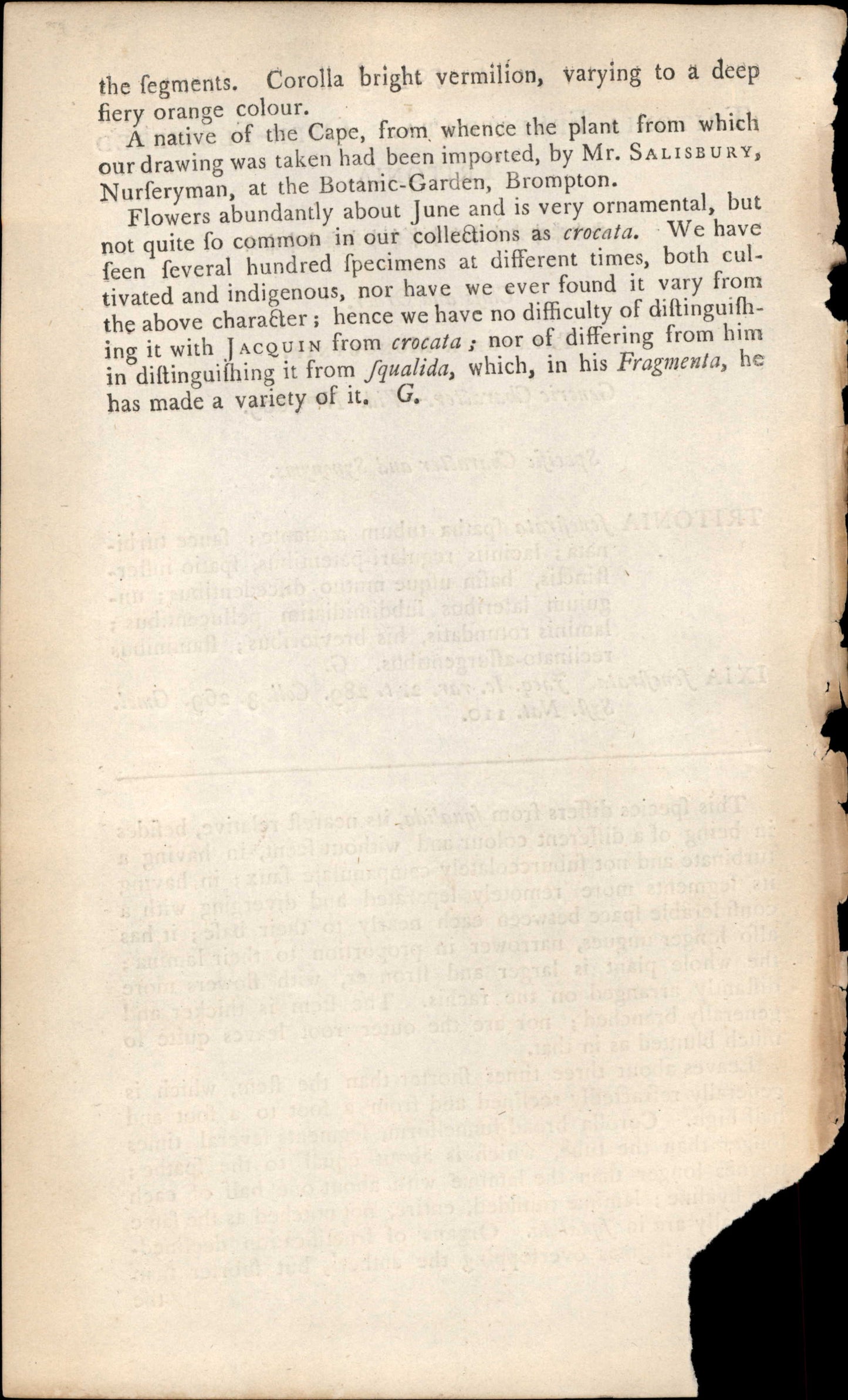
TRITONIA fenestrata spatha tubum aequante; fauce turbinata; lacinitis regulari-patentibus, spatio interfincitis, basin usque mutuo difcedentibus; unguium lateribus subdimidiatim pellucentibus; laminis rotundatis, his brevioribus; ftaminibus reclinato-affurgentibus. G. IXIA fenestrata. Jacq. Ic. rar. 2. t. 289. Coll. 3. 269. Gmel. Syft. Nat. 110. This species differs from Isqualida, its nearest relative, besides in being of a different colour and without scent, in having a turbinate and not subturceolately campanulate faux; in having its segments more remotely separated and diverging with a considerable space between each nearly to their bafe; it has also longer ungues, narrower in proportion to their lamina; the whole plant is larger and stronger, with flowers more distantly arranged on the rachis. The stem is thicker and generally branched; nor are the outer root leaves quite fo much blunted as in that. Leaves about three times shorter than the stem, which is generally refractedly reclined and from a foot to a foot and half high. Corolla broad-funnelform, segments several times longer than the tube, which is about equal to the spathe; ungues longer than the laminæ with about one half of each side hyaline; laminæ rounded, entire, not notched as the fame generally are in Isqualida. Organs of fructification declined-affurgent; stigmas overtopping the anthers, but shorter than the
This is an original plate from leftover publisher stock of Curtis's Botanical Magazine. It was never bound into a volume. This holding reached us through the British natural-history dealer Wheldon & Wesley. Sold as an original historic plate — please review photos for condition.
Share