Curtis Botanical Magazine
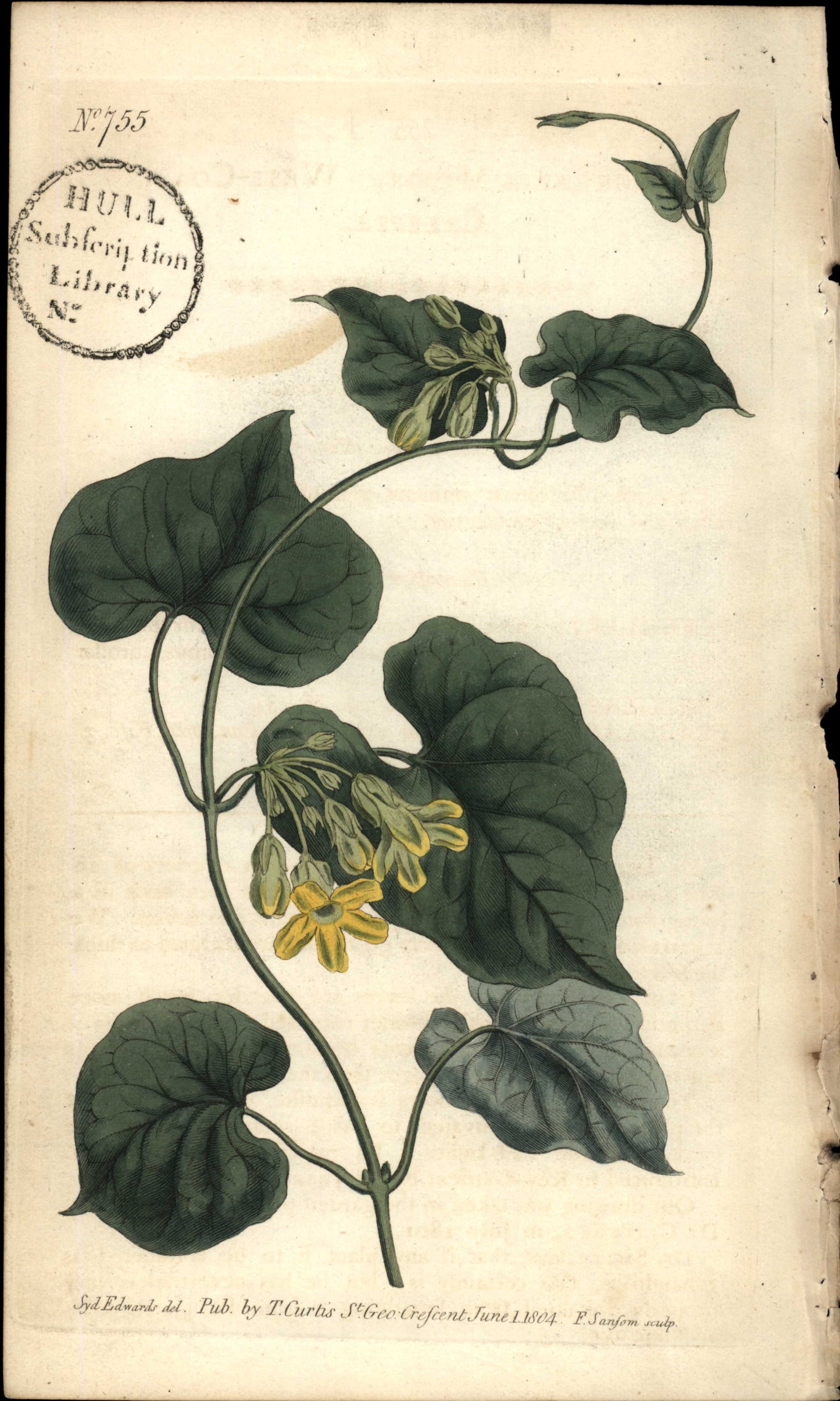
Curtis Botanical Magazine Plate 755 - Percularia minor (West-Coast Creeper) | Original Hand-Colored Print
Curtis Botanical Magazine Plate 755 - Percularia minor (West-Coast Creeper) | Original Hand-Colored Print
Couldn't load pickup availability
Original hand-colored antique botanical print from Curtis's Botanical Magazine - Plate 755, Percularia minor (West-Coast Creeper).
- Plate: 755
- Latin name: Percularia minor
- Common name: West-Coast Creeper
- Native region: East-Indies
- Flowering: July
- Linnaean class / order: Pentandria / Digynia
- Medium: Original hand-colored engraving (physical print, not a reproduction)
Original Curtis text
Transcribed from the plate's accompanying description page:
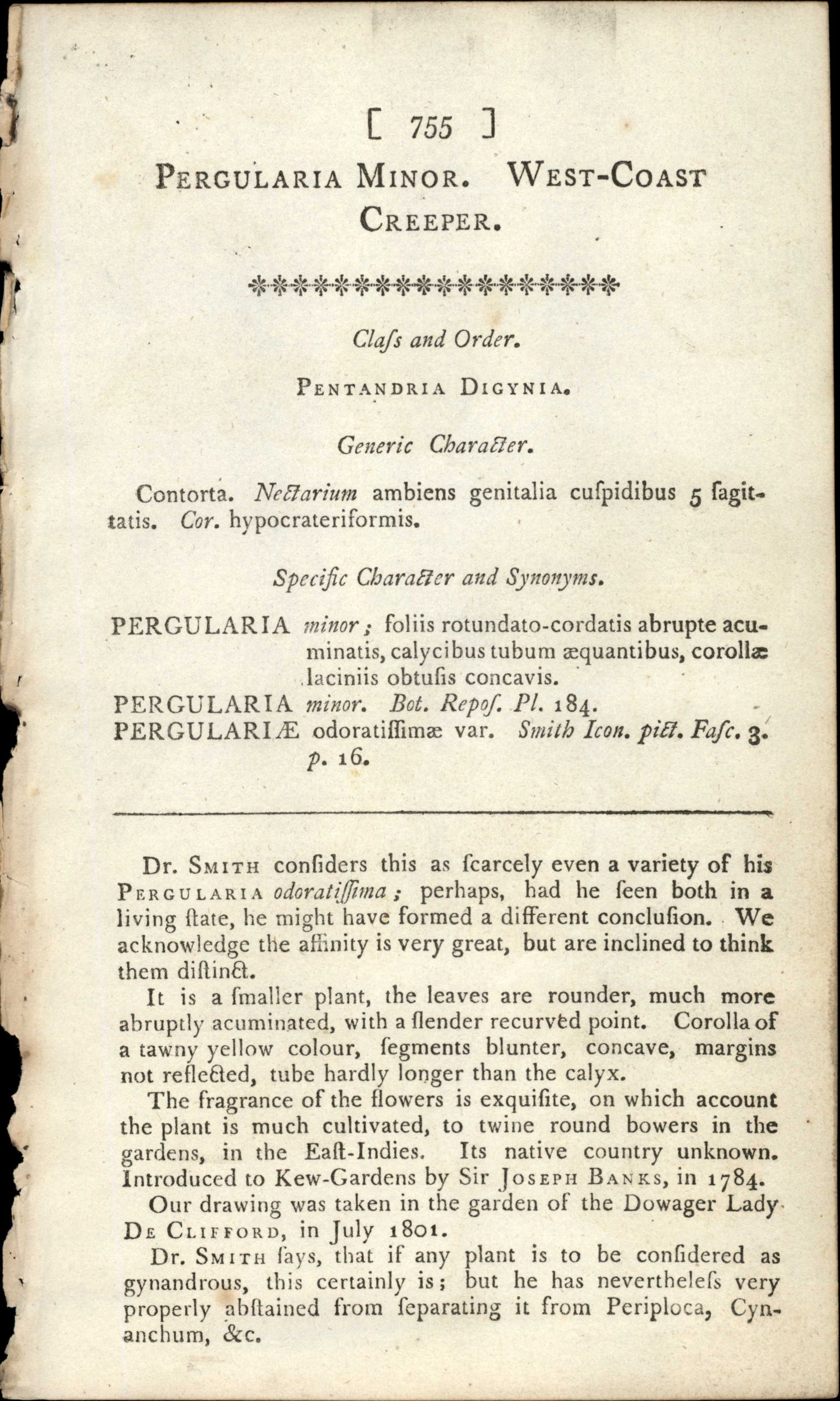
[ 755 ]
PERCULARIA MINOR. WEST-COAST CREEPER
. . .
Class and Order.
PENTANDRIA DIGYNIA.
Generic Character.
Contorta. No flarium ambiens genitalia cuspidibus 5 fagittatis. Cor. hypocrateriformis.
Specific Character and Synonyms.
PERCULARIA minor; foliis rotundato-cordatis abrupte acuminatis, calycibus tubum aequantibus, corollae laciniis obtutis concavis. PERCULARIA minor. Bot. Repos. Pl. 184. PERCULARIÆ odoratissimae var. Smith Icon. pict. Psfc. 3. p. 16. Dr. Smith considers this as scarcely even a variety of his PERCULARIA odoratissima; perhaps, had he seen both in a living state, he might have formed a different conclusion. We acknowledge the affinity is very great, but are inclined to think them distinct.
It is a smaller plant, the leaves are rounder, much more abruptly acuminated, with a slender recurved point. Corolla of a tawny yellow colour, segments blunter, concave, margins not reflected, tube hardly longer than the calyx. The fragrance of the flowers is exquisite, on which account the plant is much cultivated, to twine round bowers in the gardens, in the East-Indies. Its native country unknown. Introduced to Kew-Gardens by Sir JOSEPH BANKS, in 1784. Our drawing was taken in the garden of the Dowager Lady DE CLIFFORD, in July 1801. Dr. SMITH says, that if any plant is to be considered as gynandrous, this certainly is; but he has nevertheless very properly abstained from separating it from Periploca, Cynanchum, &c.
This is an original plate from leftover publisher stock of Curtis's Botanical Magazine. It was never bound into a volume. This holding reached us through the British natural-history dealer Wheldon & Wesley. Sold as an original historic plate — please review photos for condition.
Share