Curtis Botanical Magazine
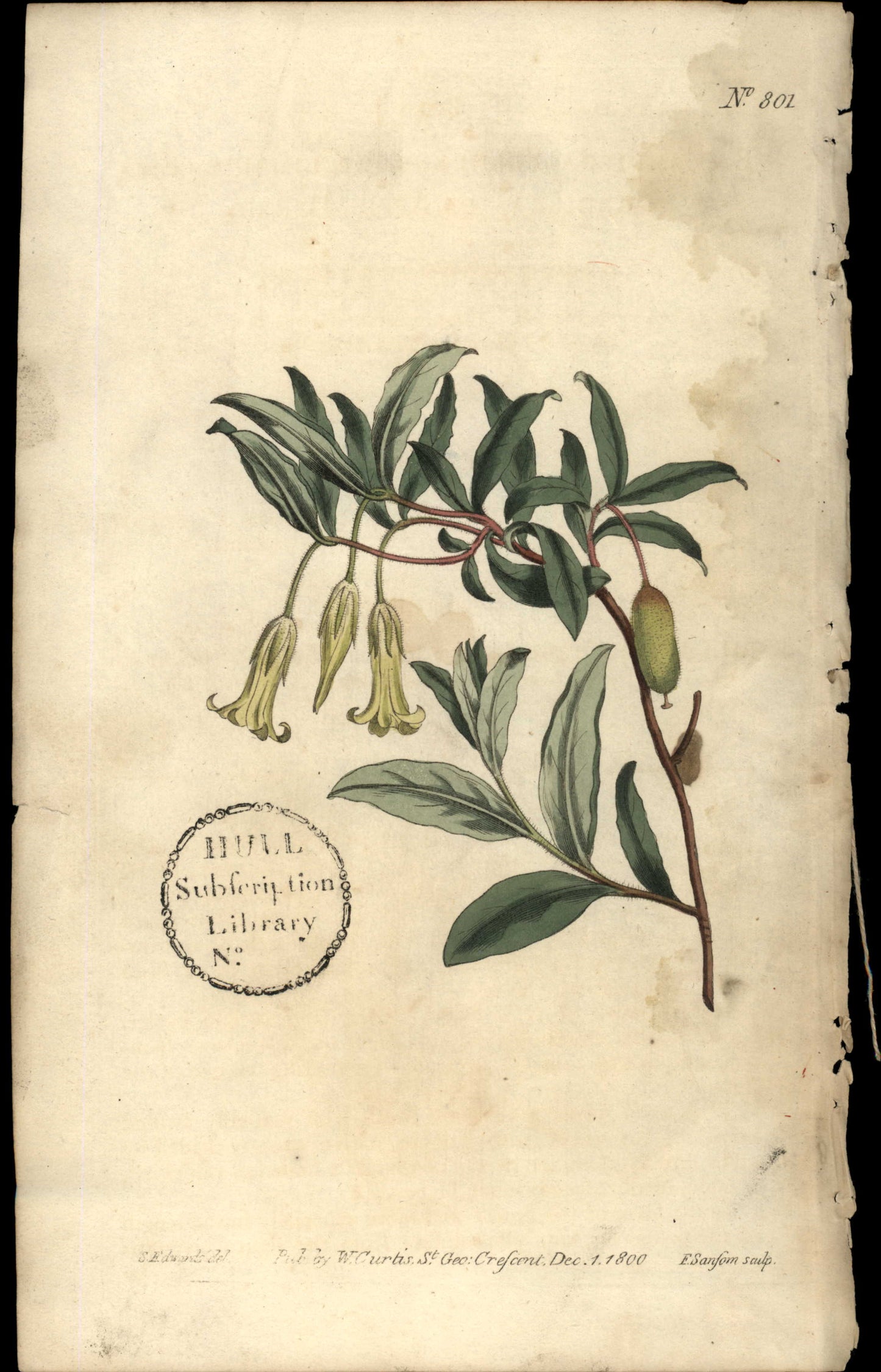
Curtis Botanical Magazine Plate 801 - Billardiera scandens (Climbing Billardiera, or Apple-berry) | Original Hand-Colored Print
Curtis Botanical Magazine Plate 801 - Billardiera scandens (Climbing Billardiera, or Apple-berry) | Original Hand-Colored Print
Couldn't load pickup availability
Original hand-colored antique botanical print from Curtis's Botanical Magazine - Plate 801, Billardiera scandens (Climbing Billardiera, or Apple-berry).
- Plate: 801
- Latin name: Billardiera scandens
- Common name: Climbing Billardiera, or Apple-berry
- Native region: New South-Wales
- Linnaean class / order: Pentandria / Monogynia
- Publication: Dec. 1, 1803
- Artist: S. Sanford
- Engraver: R. Curtis
- Medium: Original hand-colored engraving (physical print, not a reproduction)
Original Curtis text
Transcribed from the plate's accompanying description page:
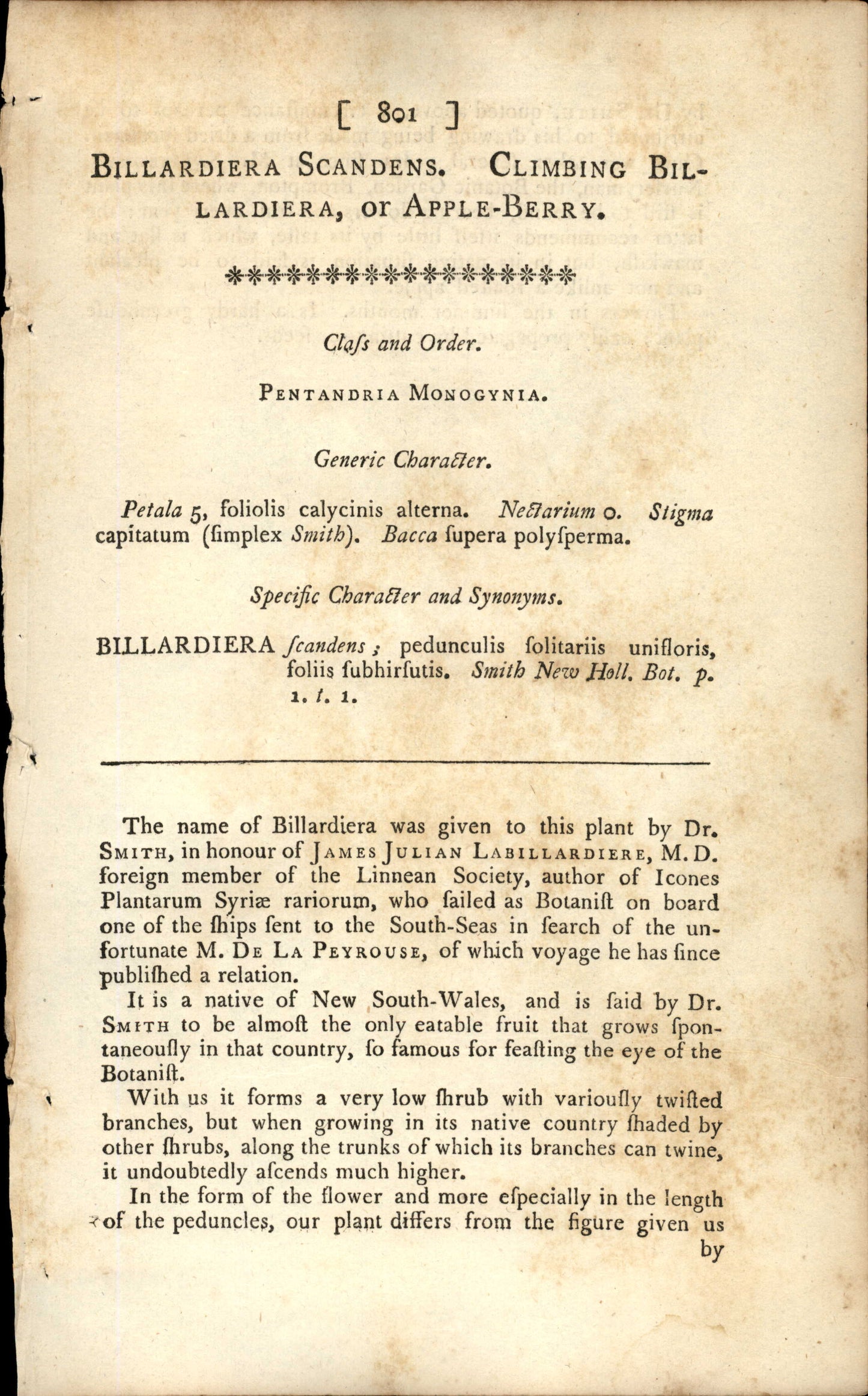
[ 801 ]
BILLARDIERA SCANDENS. CLIMBING BILLARDIERA, OR APPLE-BERRY.
. . .
Class and Order.
PENTANDRIA MONOGYNIA.
Generic Character.
Petala 5, foliolis calycinis alterna. Nectarium 0. Stigma capitatum (simplex Smith). Bacca superа polysperma.
Specific Character and Synonyms.
BILLARDIERA scandens; pedunculis foliatariis unifloris, foliis subhirfutis. Smith New Holl. Bot. p. 1. 1. 1. The name of Billardiera was given to this plant by Dr. SMITH, in honour of JAMES JULIAN LABILLARDIERE, M.D. foreign member of the Linnaean Society, author of Icones Plantarum Syriæ rariorum, who failed as Botanist on board one of the ships sent to the South-Seas in search of the unfortunate M. DE LA PEYROUSTE, of which voyage he has since published a relation.
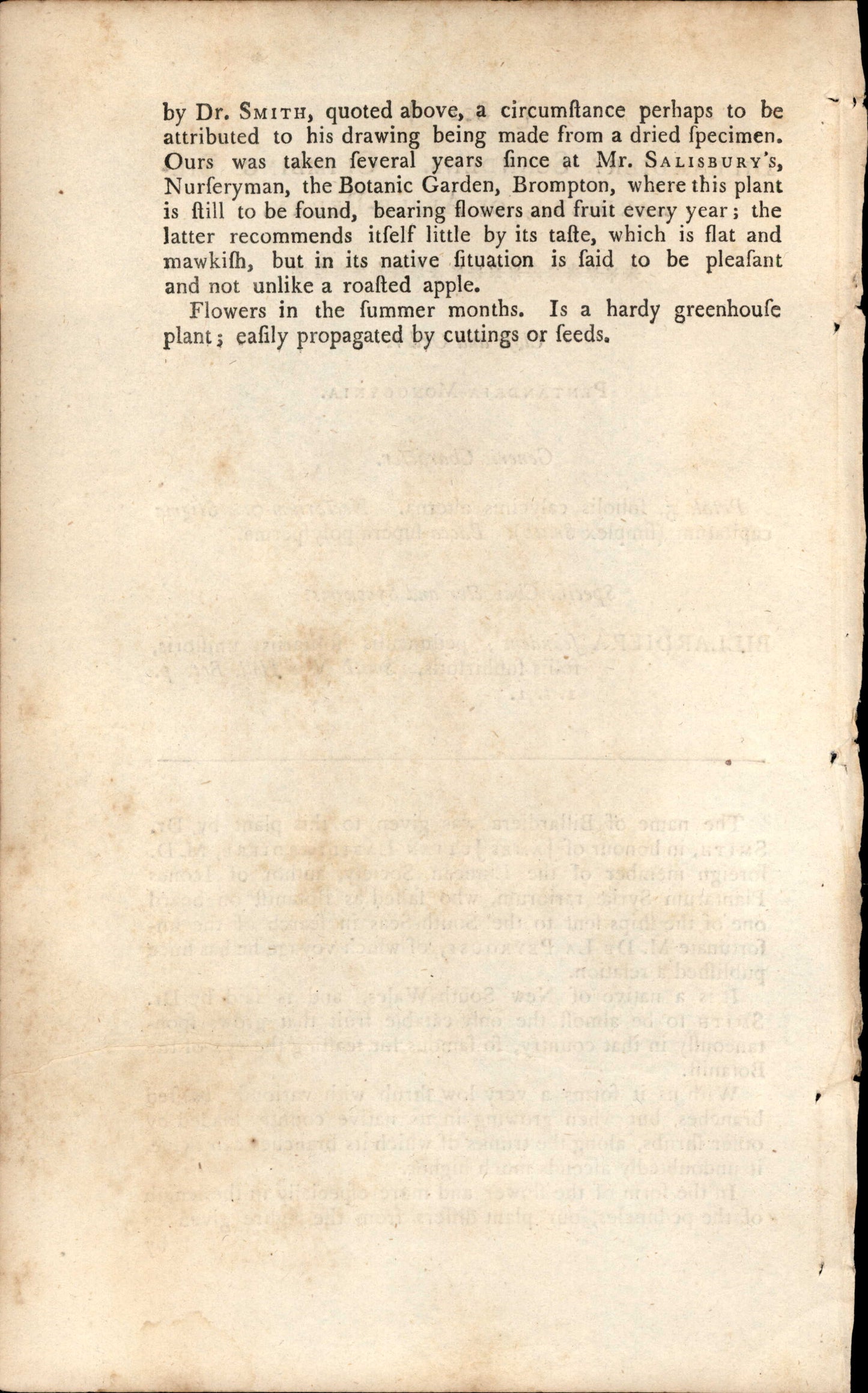
It is a native of New South-Wales, and is said by Dr. SMITH to be almost the only catable fruit that grows spontaneously in that country, so famous for feasting the eye of the Botanist. With us it forms a very low shrub with variously twisted branches, but when growing in its native country shaded by other shrubs, along the trunks of which its branches can twine, it undoubtedly ascends much higher. In the form of the flower and more especially in the length of the peduncles, our plant differs from the figure given us by
This is an original plate from leftover publisher stock of Curtis's Botanical Magazine. It was never bound into a volume. This holding reached us through the British natural-history dealer Wheldon & Wesley. Sold as an original historic plate — please review photos for condition.
Share