Curtis Botanical Magazine
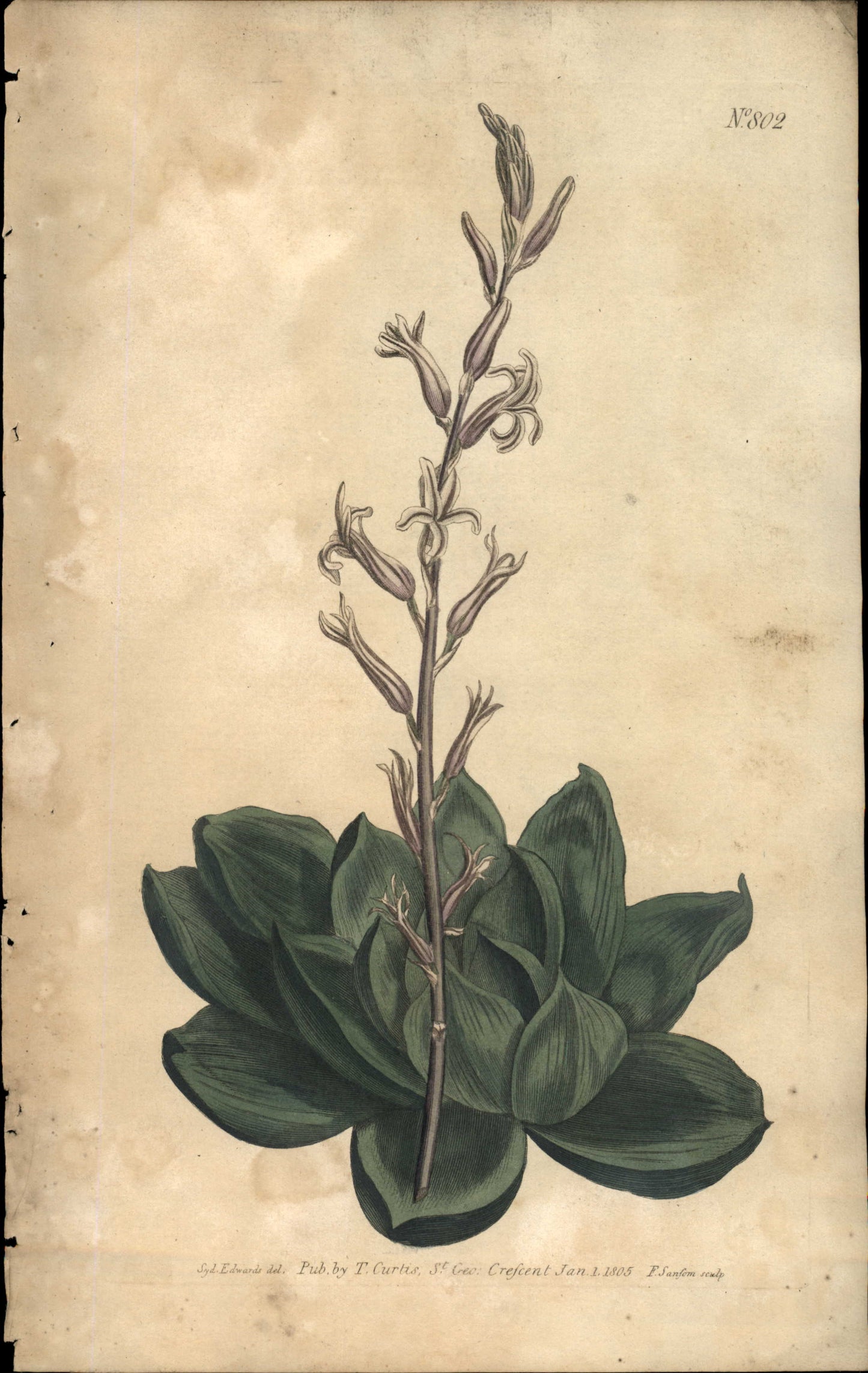
Curtis Botanical Magazine Plate 802 - Aloe cymbiformis (Tender-leaved Aloe) | Original Hand-Colored Print
Curtis Botanical Magazine Plate 802 - Aloe cymbiformis (Tender-leaved Aloe) | Original Hand-Colored Print
Couldn't load pickup availability
Original hand-colored antique botanical print from Curtis's Botanical Magazine - Plate 802, Aloe cymbiformis (Tender-leaved Aloe).
- Plate: 802
- Latin name: Aloe cymbiformis
- Common name: Tender-leaved Aloe
- Native region: Cape of Good Hope
- Linnaean class / order: Hexandria / Monogynia
- Publication: Jan. 1, 1805
- Artist: Syd. Edwards del.
- Engraver: T. Curtis
- Medium: Original hand-colored engraving (physical print, not a reproduction)
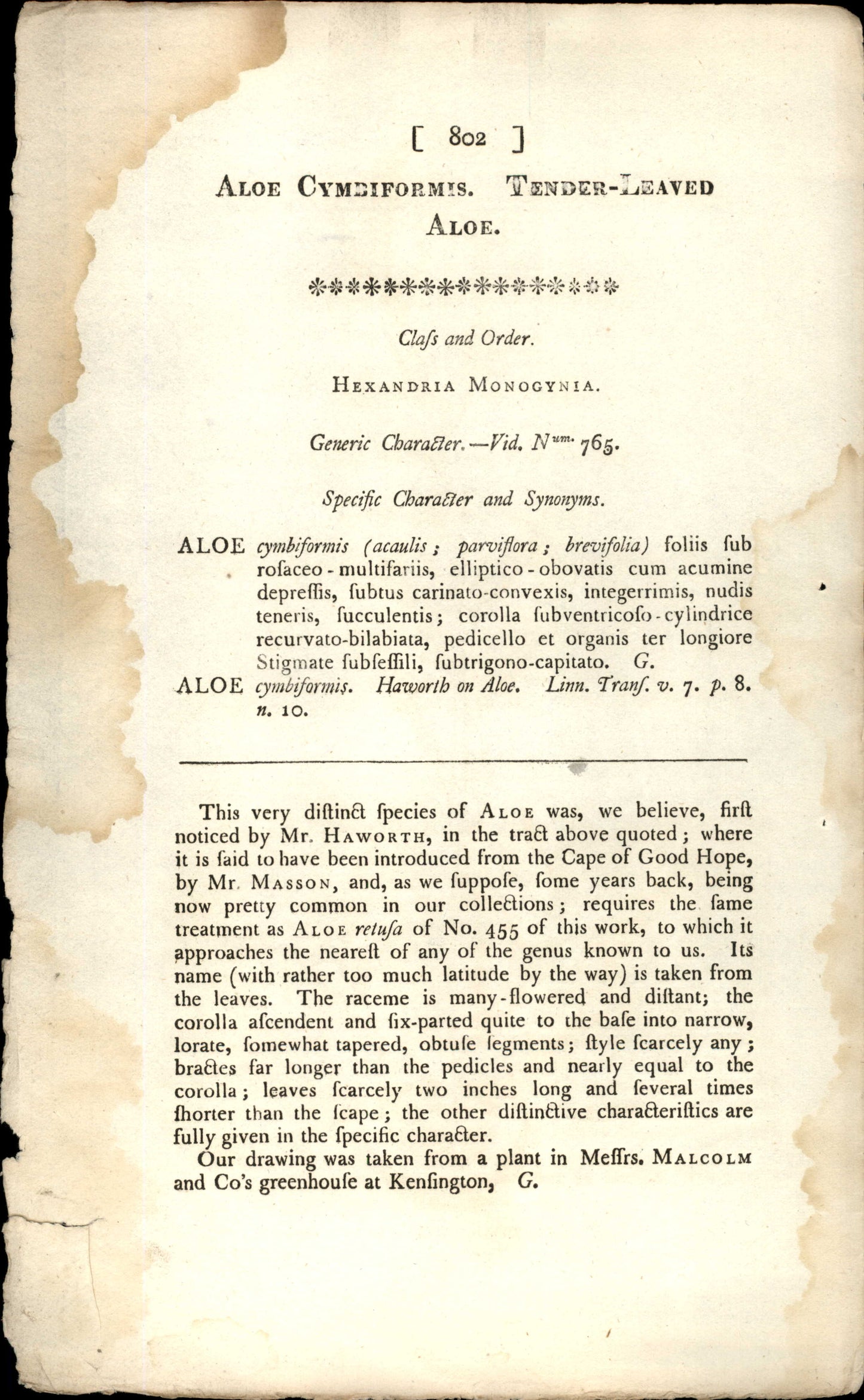
Original Curtis text
Transcribed from the plate's accompanying description page:
[ 802 ]
ALOE CYMBIFORMIS. TENDER-LEAVED ALOE.
. . .
Class and Order.
HEXANDRIA MONOGYNIA.
Generic Character.
—Vid. N° 768.
Specific Character and Synonyms.
ALOE cymbiformis (acaulis; parviflora; brevifolia) foliis sub rofaceo-multifariis, elliptico-obovatis cum acuminé, depressis, subtus carinato-convexis, integerrimis, nudis, teneris, succulentis; corolla subventricolo-cylindrica, recurvato-bilabiata, pediccllo et organis ter longiore. Stigmate subfessili, subtrigono-capitato. G. ALOE cymbiformis. Haworth on Aloe. Linn. Trans. v. 7. p. 8. n. 10. This very distinct species of ALOE was, we believe, first noticed by Mr. HAWORTH, in the tract above quoted; where it is said to have been introduced from the Cape of Good Hope, by Mr. MASON, and, as we suppose, some years back, being now pretty common in our collections; requires the same treatment as ALOE retusa of No. 455 of this work, to which it approaches the nearest of any of the genus known to us. Its name (with rather too much latitude by the way) is taken from the leaves. The raceme is many-flowered and distant; the corolla ascendent and six-parted quite to the base into narrow, lorate, somewhat tapered, obtuse segments; style scarcely any; bractles far longer than the pedicles and nearly equal to the corolla; leaves scarcely two inches long and several times shorter than the scape; the other distinctive characteristics are fully given in the specific character. Our drawing was taken from a plant in Messrs. MALCOLM and Co.'s greenhouse at Kensington. G.
This is an original plate from leftover publisher stock of Curtis's Botanical Magazine. It was never bound into a volume. This holding reached us through the British natural-history dealer Wheldon & Wesley. Sold as an original historic plate — please review photos for condition.
Share