Curtis Botanical Magazine
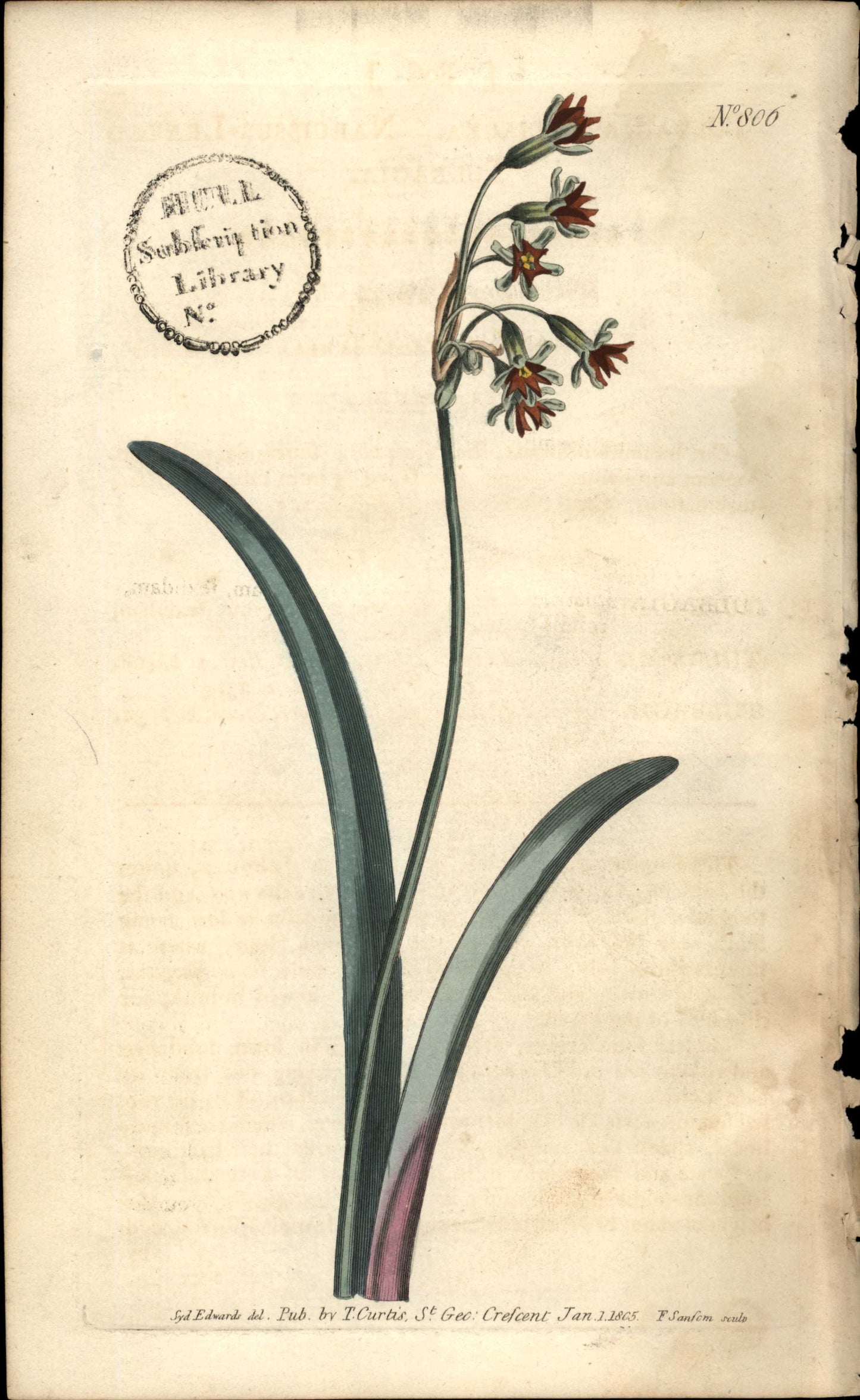
Curtis Botanical Magazine Plate 806 - Tulbagia alliacea (Narcissus-leaved Tulbagia) | Original Hand-Colored Print
Curtis Botanical Magazine Plate 806 - Tulbagia alliacea (Narcissus-leaved Tulbagia) | Original Hand-Colored Print
Couldn't load pickup availability
Original hand-colored antique botanical print from Curtis's Botanical Magazine - Plate 806, Tulbagia alliacea (Narcissus-leaved Tulbagia).
- Plate: 806
- Latin name: Tulbagia alliacea
- Common name: Narcissus-leaved Tulbagia
- Native region: Cape of Good Hope
- Flowering: July
- Linnaean class / order: Hexandria / Monogynia
- Medium: Original hand-colored engraving (physical print, not a reproduction)
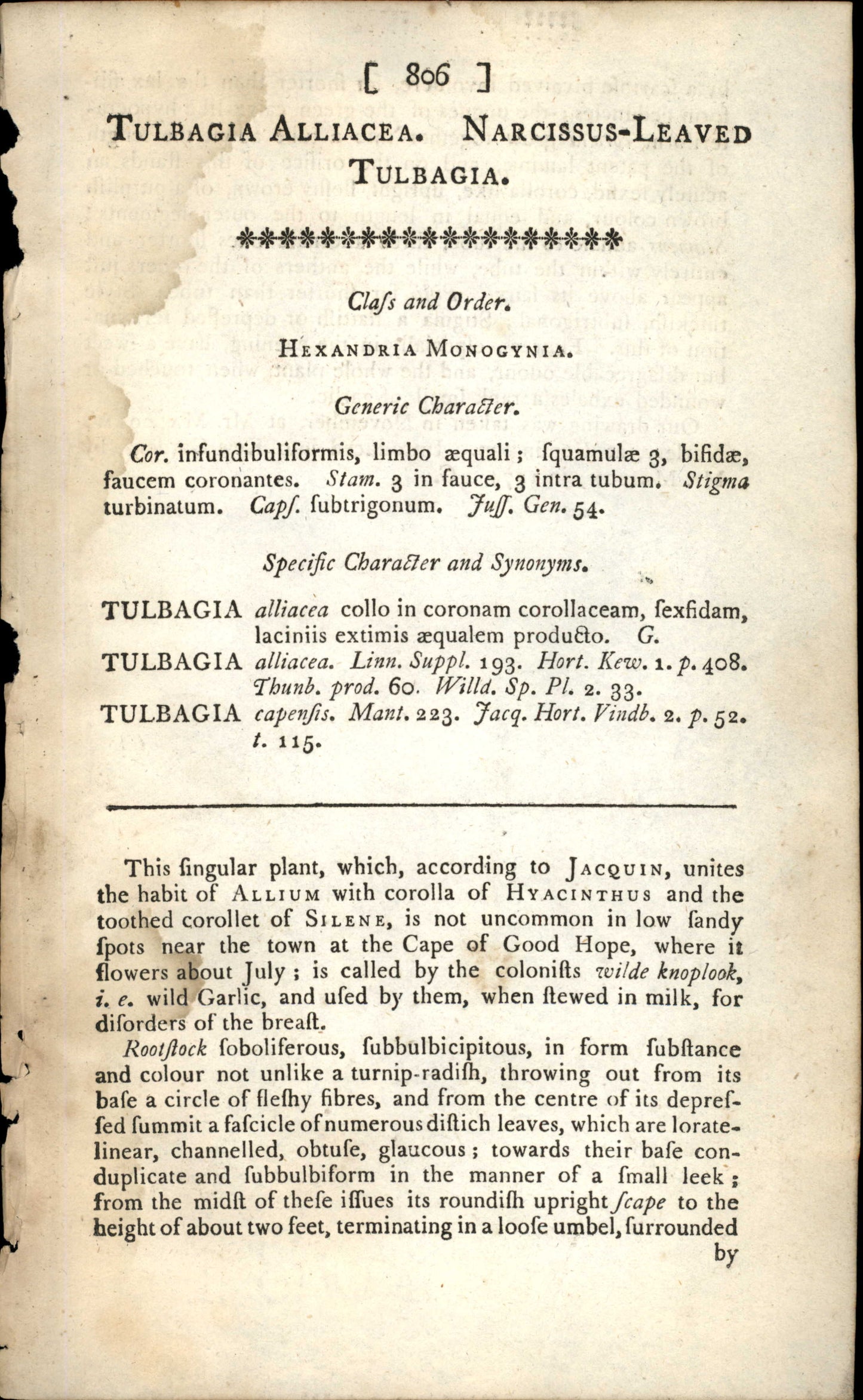
Original Curtis text
Transcribed from the plate's accompanying description page:
[ 806 ]
TULBAGIA ALLIACEA. NARCISSUS-LEAVED TULBAGIA.
. . .
Class and Order.
HEXANDRIA MONOGYNIA.
Generic Character.
Cor. infundibuliformis, limbo æquali; squamulæ 2, bifidæ, faucem coronantes. Stam. 3 in fauce, 3 intra tubum. Stigma turbinatum. Capsl. subtrigenoum. Juss. Gen. 54.
Specific Character and Synonyms.
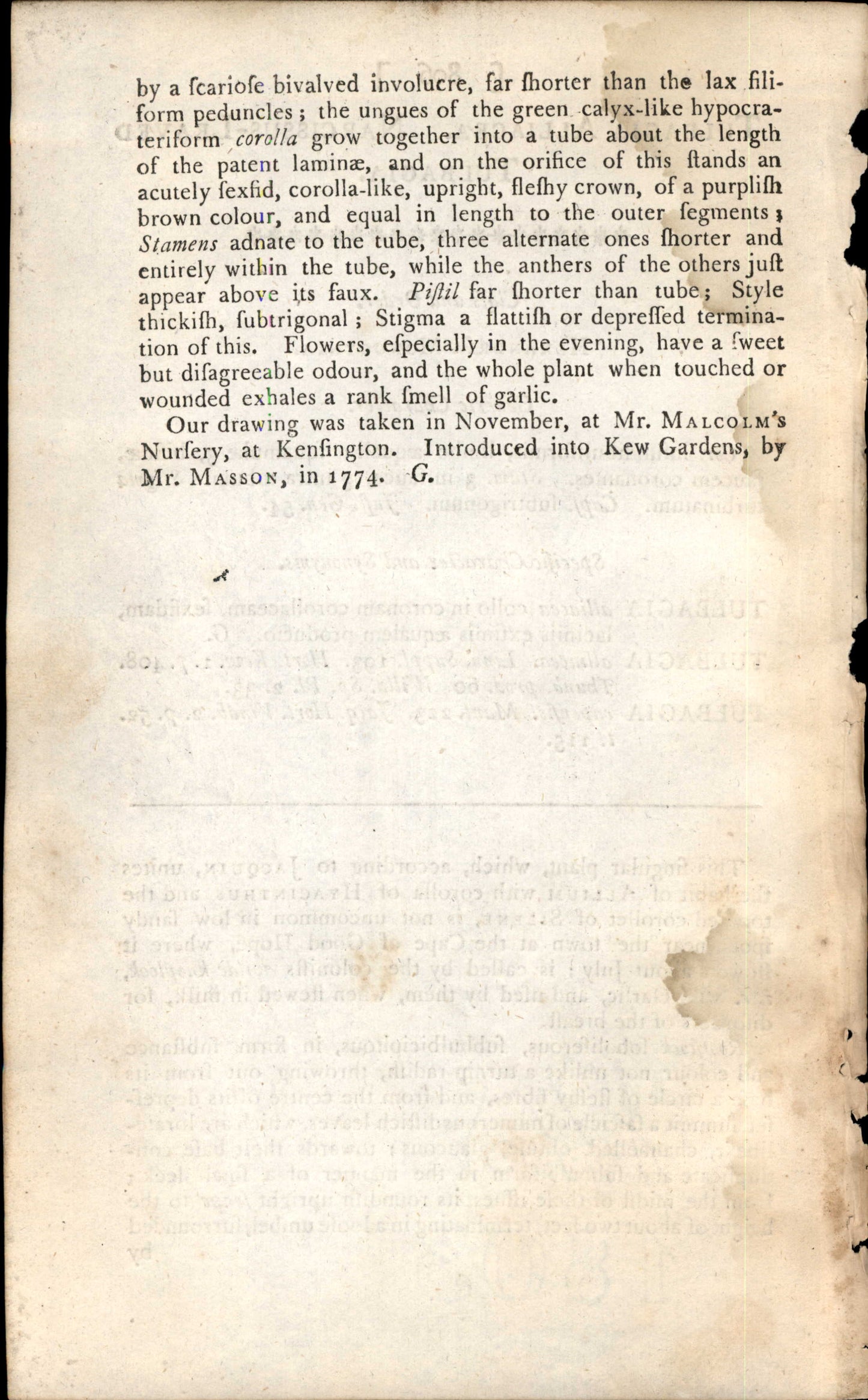
TULBAGIA alliacea collo in coronam corolla ceam, sexfidam, laciniis extimis æqualem producto. G. TULBAGIA alliacea. Linn. Suppl. 193. Hort. Kew. 1. p. 408. Thunb. prod. 60. Willd. Sp. Pl. 2. 23. TULBAGIA capensis. Mant. 222. Jacq. Hort. Vind. 2. p. 52. f. 115. This singular plant, which, according to JACQUIN, unites the habit of ALLIUM with corolla of HYACINTHUS and the toothed corollet of SILENE, is not uncommon in low sandy spots near the town at the Cape of Good Hope, where it flowers about July; is called by the colonists wilde knoplook, i.e. wild Garlic, and used by them, when stewed in milk, for disorders of the breast. Rootstock foboli ferous, subbulbicipitous, in form substance and colour not unlike a turnip-radish, throwing out from its base a circle of fleshy fibres, and from the centre of its depressed summit a fascicle of numerous distichous leaves, which are lorate-linear, channelled, obtuse, glaucous; towards their base con-duplicate and subbulbiform in the manner of a small leek; from the midst of these issues its roundish upright scape to the height of about two feet, terminating in a loose umbel, surrounded by
This is an original plate from leftover publisher stock of Curtis's Botanical Magazine. It was never bound into a volume. This holding reached us through the British natural-history dealer Wheldon & Wesley. Sold as an original historic plate — please review photos for condition.
Share