Curtis Botanical Magazine
Curtis Botanical Magazine Plate 809 - Malpighia volubilis (Twining Barbadoes-Cherry) | Original Hand-Colored Print
Curtis Botanical Magazine Plate 809 - Malpighia volubilis (Twining Barbadoes-Cherry) | Original Hand-Colored Print
Couldn't load pickup availability
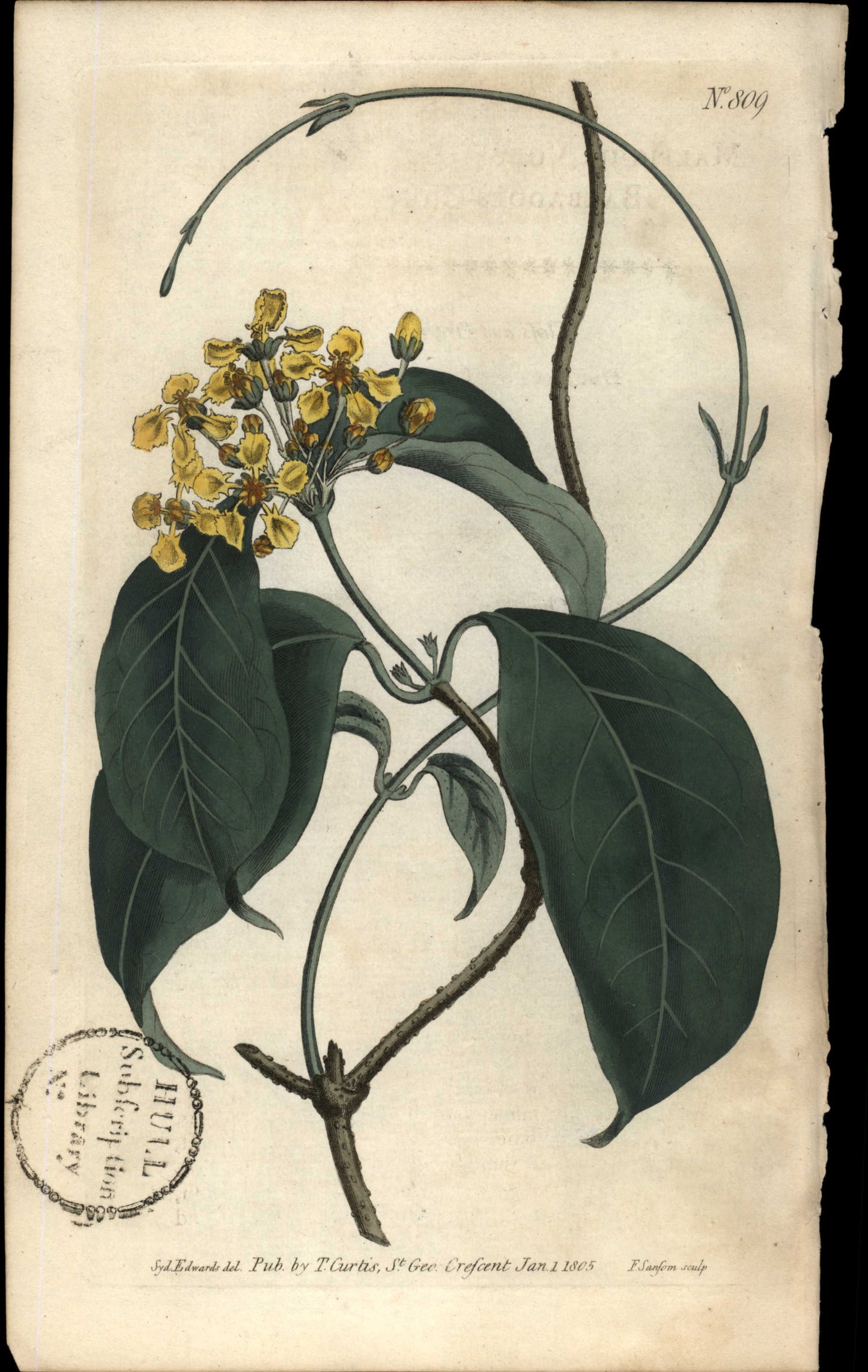
Original hand-colored antique botanical print from Curtis's Botanical Magazine - Plate 809, Malpighia volubilis (Twining Barbadoes-Cherry).
- Plate: 809
- Latin name: Malpighia volubilis
- Common name: Twining Barbadoes-Cherry
- Flower colour: Yellow
- Linnaean class / order: Decandria / Tricynia
- Publication: Jan 1 1805
- Artist: Flanders
- Medium: Original hand-colored engraving (physical print, not a reproduction)
Original Curtis text
Transcribed from the plate's accompanying description page:
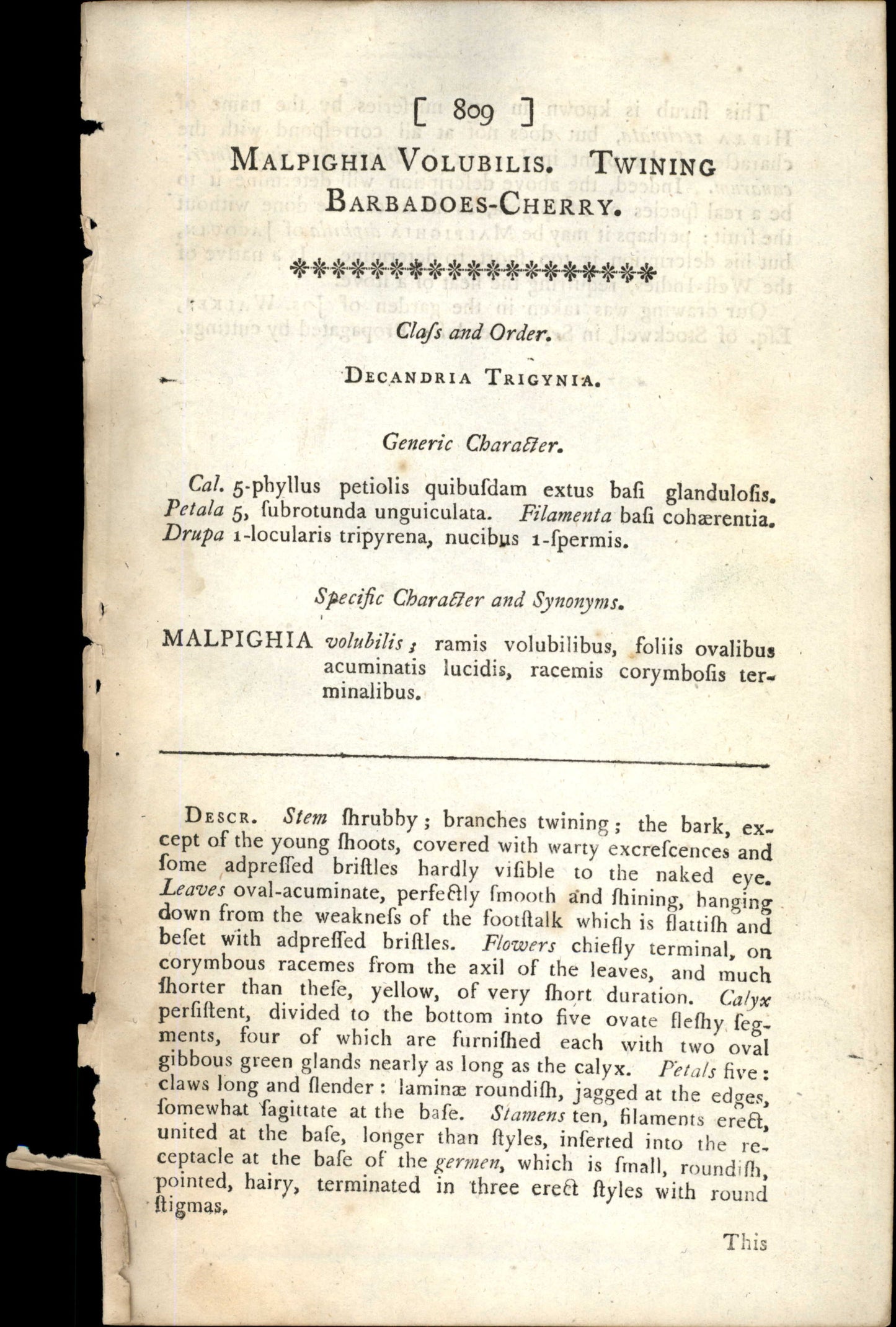
[ 809 ]
MALPIGHIA VOLUBILIS. TWINING BARBADOES-CHERRY.
. . .
Class and Order.
DECANDRIA TRICYNIA.
Generic Character.
Cal. 5-phyllus petiolis quibusdam extus basi glandulosus. Petala 5, subrotunda unguiculata. Filamenta basi cohaerentia. Drupa 1-locularis tripyrena, nucibus 1-spermis.
Specific Character and Synonyms.
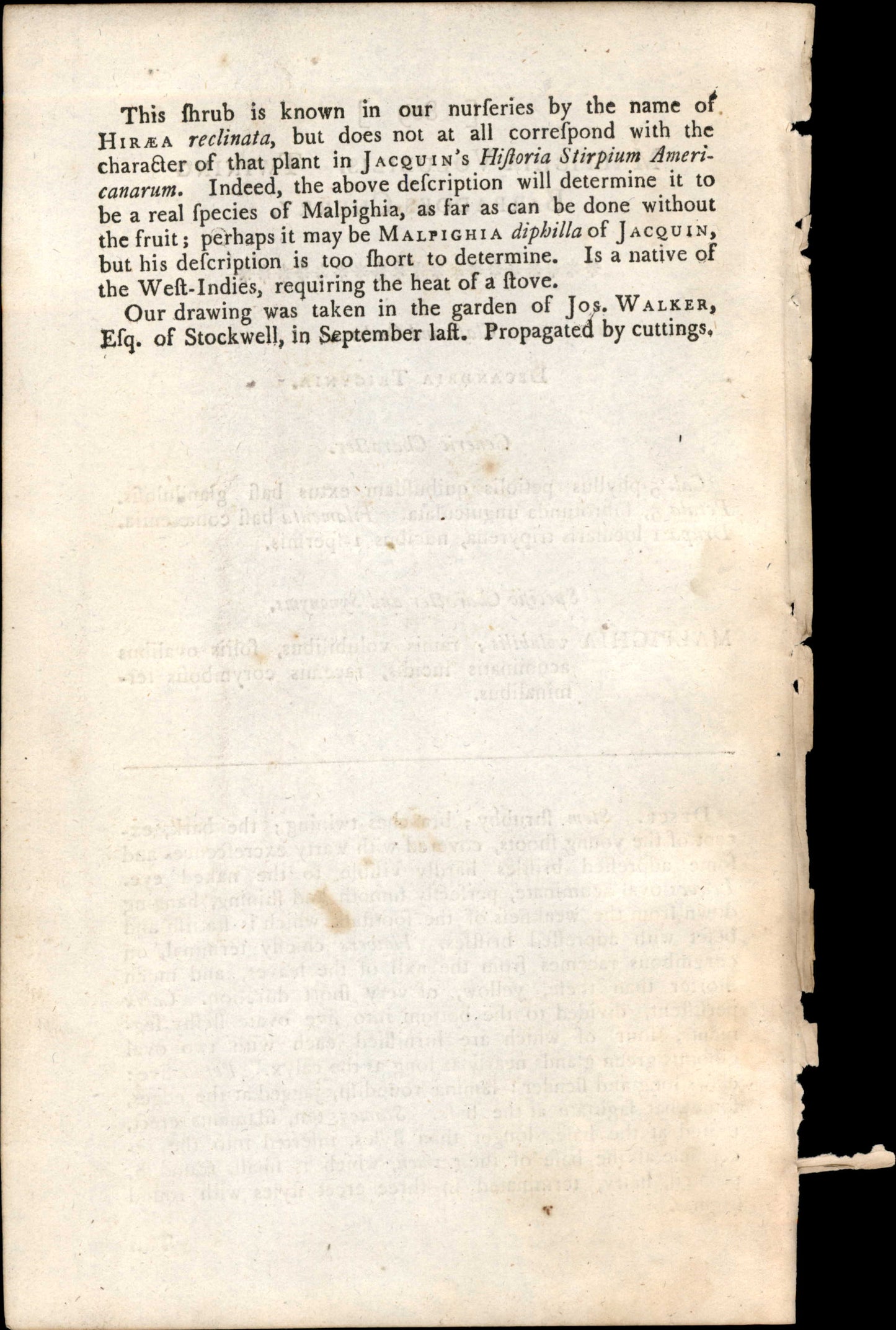
MALPIGHIA volubilis; ramis volubilibus, foliis ovalibus acuminatis lucidis, racemis corymobolis terminalibus. DESCR. Stem shrubby; branches twining; the bark, except of the young shoots, covered with warty excrescences and some adpressed bristles hardly visible to the naked eye. Leaves oval-acuminate, perfectly smooth and shining, hanging down from the weakness of the footstalk which is flattish and belet with adpressed bristles. Flowers chiefly terminal, on corymous racemes from the axil of the leaves, and much shorter than these, yellow, of very short duration. Calyx persistent, divided to the bottom into five ovate fleshy segments, four of which are furnished each with two oval gibbous green glands nearly as long as the calyx. Petals five; claws long and slender; laminae roundish, jagged at the edges, somewhat sagittate at the base. Stamens ten, filaments erect, united at the bafe, longer than styles, inserted into the receptacle at the bafe of the germen, which is small, roundish, pointed, hairy, terminated in three erect styles with round stigmas.
This is an original plate from leftover publisher stock of Curtis's Botanical Magazine. It was never bound into a volume. This holding reached us through the British natural-history dealer Wheldon & Wesley. Sold as an original historic plate — please review photos for condition.
Share