Curtis Botanical Magazine
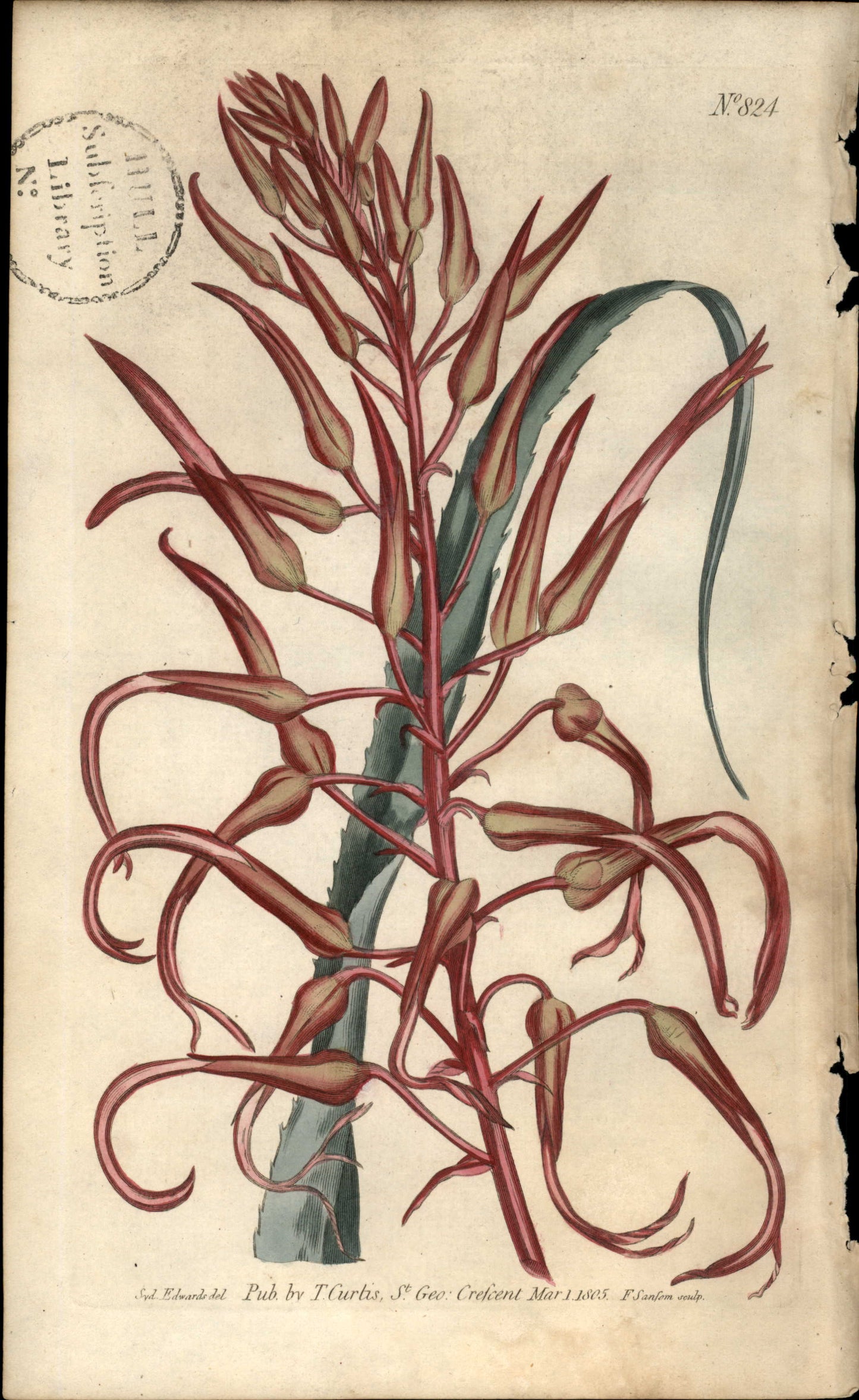
Curtis Botanical Magazine Plate 824 - Pitcairnia bromeliifolia (Scarlet Pitcairnia) | Original Hand-Colored Print
Curtis Botanical Magazine Plate 824 - Pitcairnia bromeliifolia (Scarlet Pitcairnia) | Original Hand-Colored Print
Couldn't load pickup availability
Original hand-colored antique botanical print from Curtis's Botanical Magazine - Plate 824, Pitcairnia bromeliifolia (Scarlet Pitcairnia).
- Plate: 824
- Latin name: Pitcairnia bromeliifolia
- Common name: Scarlet Pitcairnia
- Native region: Jamaica
- Flowering: April and May
- Flower colour: Scarlet
- Linnaean class / order: Hexandria / Monogynia
- Publication: March 1, 1805
- Artist: S.J. Evershed
- Engraver: F. Sansom
- Medium: Original hand-colored engraving (physical print, not a reproduction)
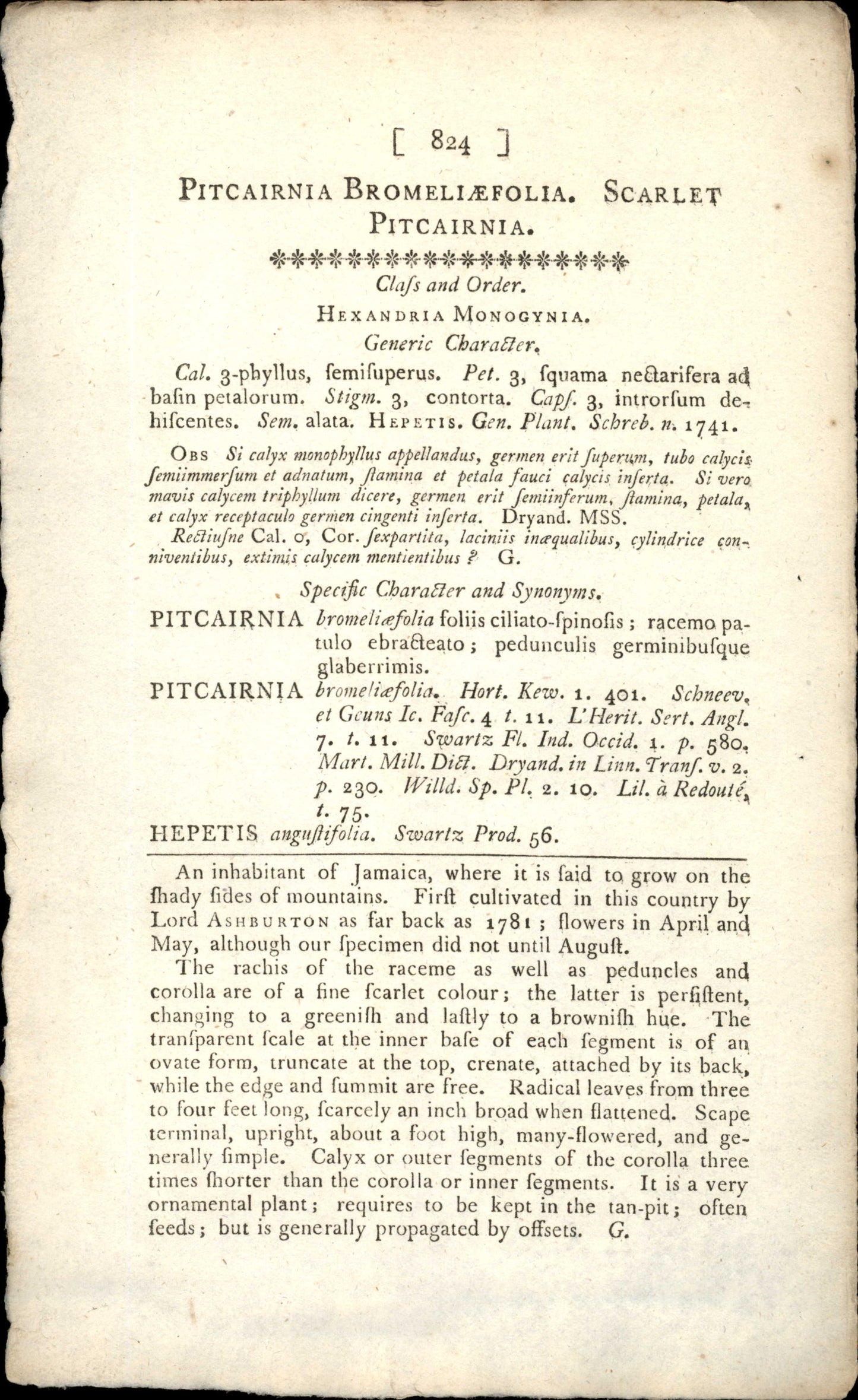
Original Curtis text
Transcribed from the plate's accompanying description page:
[ 824 ]
PITCAIRNIA BROMELIIFOLIA. SCARLET PITCAIRNIA.
. . .
Class and Order.
HEXANDRIA MONOGYNIA.
Generic Character.
Cal. 3-phyllus, semifuperus. Pet. 3, squama nectarifera ad basin petalorum. Stygm. 3, contorta. Capl. 3, introrfum dehiscentes. Sem. alata. HIPETIS. Gen. Plant. Schreb. n. 1741. Obs Si calyx monophyllus appellandus, germen erit superius, tubo calcycis semiimmersum et adnatum, flamina et petala fauci calyces inferta. Si vero mavis caly em triphyllum dicere, germen erit semiinfcrum, flamina, petala, et calyx receptaculo germen cingenti inferta. Dryand. MSS. Rectifque Cal. 6, Cor. 6x, laciniis inæqualibus, cylindrice coniventibus, extimis calycem mentientibus & G.
Specific Character and Synonyms.
PITCAIRNIA bromeliifolia foliis ciliato-spinofis; racemo patulo ebractieato; pedunculis germinibusque glaberrimis. PITCAIRNIA bromeliifolia. Hort. Kew. 1. 401. Schneev. et Grans Ic. Fafc. 4. t. 11. L'Herit. Sert. Angl. 7. t. 11. Swartz Fl. Ind. Occid. 1. p. 580. Murt. Mill. Dit. Dryand. in Linn. Trans. v. 2. p. 230. Willd. Sp. Pl. 2. 10. Lil. à Redouté, p. 75. HEPETIS angustifolia. Swartz Prod. 56. An inhabitant of Jamaica, where it is said to grow on the shady sides of mountains. First cultivated in this country by Lord Ashburton as far back as 1781; flowers in April and May, although our specimen did not until August. The rachis of the raceme as well as peduncles and corolla are of a fine scarlet colour; the latter is persistent, changing to a greenish and lastly to a brownish hue. The tranisparent scale at the inner bafe of each segment is of an ovate form, truncate at the top, crenate, attached by its back, while the edge and summit are free. Radical leaves from three to four feet long, scarcely an inch broad when flattened. Scape terminal, upright, about a foot high, many-flowered, and generally fimple. Calyx or outer fegments of the corolla three times fhorter than the corolla or inner fegments.
It is a very ornamental plant; requires to be kept in the tan-pit; often feeds; but is generally propagated by offsets. G.
This is an original plate from leftover publisher stock of Curtis's Botanical Magazine. It was never bound into a volume. This holding reached us through the British natural-history dealer Wheldon & Wesley. Sold as an original historic plate — please review photos for condition.
Share