Curtis Botanical Magazine
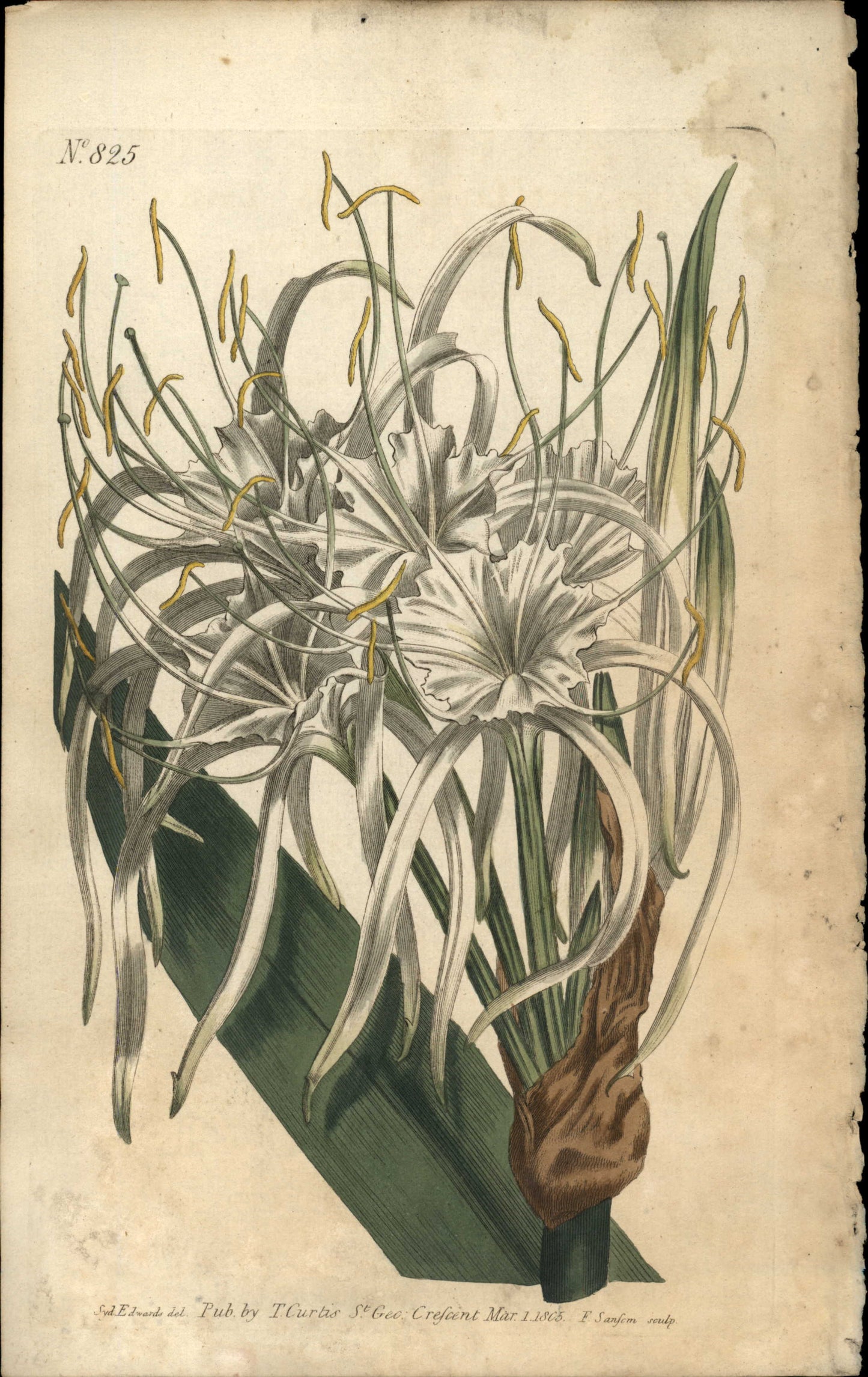
Curtis Botanical Magazine Plate 825 - Pancratium littorale (Lesser Sea-shore Pancratium) | Original Hand-Colored Print
Curtis Botanical Magazine Plate 825 - Pancratium littorale (Lesser Sea-shore Pancratium) | Original Hand-Colored Print
Couldn't load pickup availability
Original hand-colored antique botanical print from Curtis's Botanical Magazine - Plate 825, Pancratium littorale (Lesser Sea-shore Pancratium).
- Plate: 825
- Latin name: Pancratium littorale
- Common name: Lesser Sea-shore Pancratium
- Native region: Carthagena, Island of Tierra Bomba; Cayenne
- Flower colour: White
- Linnaean class / order: Hexandria / Monogynia
- Publication: Mar 1 1805
- Artist: S. Edwards del.
- Engraver: F. Sansom sculp.
- Medium: Original hand-colored engraving (physical print, not a reproduction)
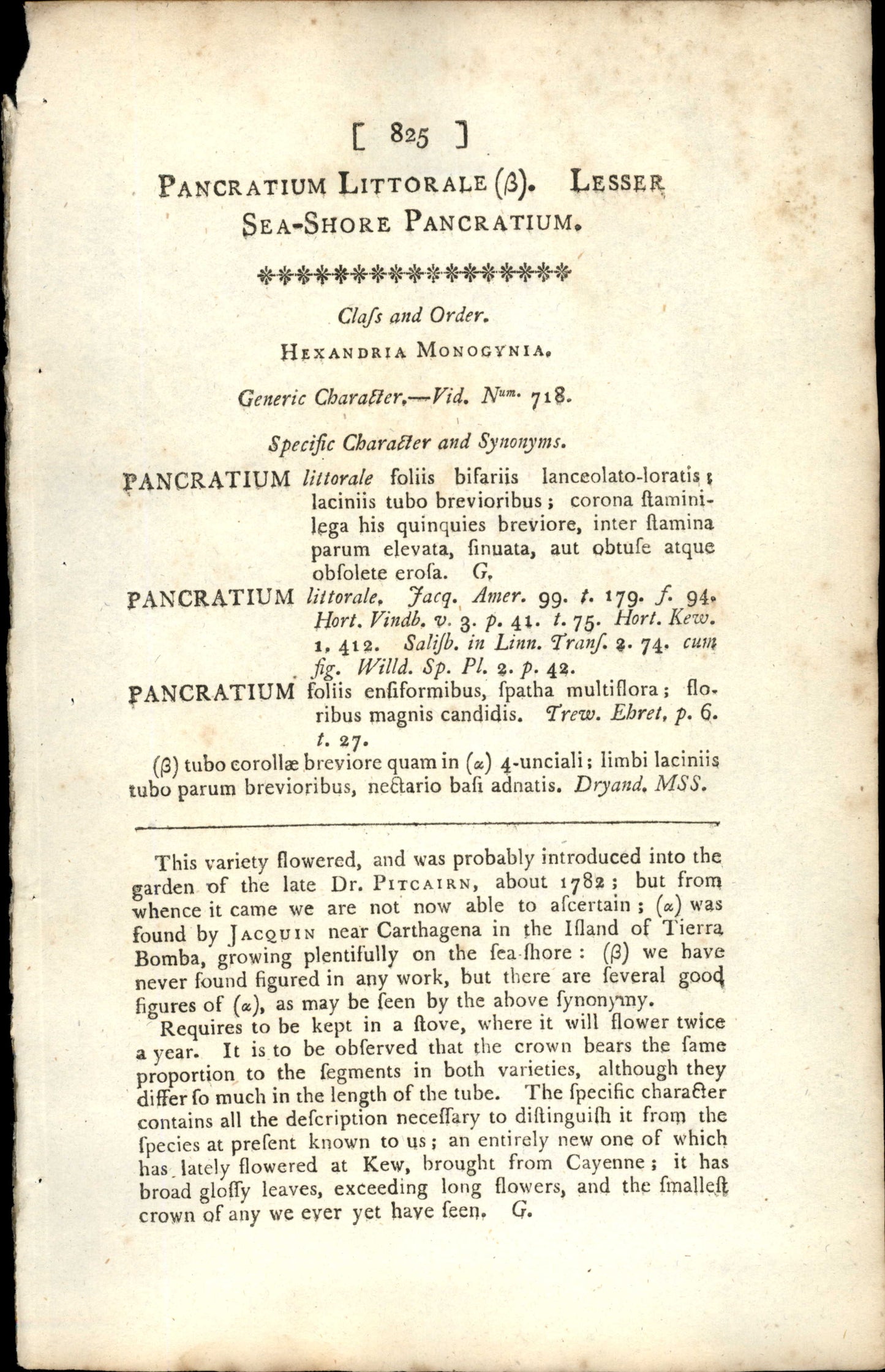
Original Curtis text
Transcribed from the plate's accompanying description page:
[ 825 ]
PANCRATIUM LITTORALE (3). LESSER SEA-SHORE PANCRATIUM.
. . .
Class and Order.
HEXANDRIA MONOGYNIA,
Generic Character.
—Vid. Num. 718.
Specific Character and Synonyms.
PANCRATIUM littorale foliis bifariis lanceolato-loratis; laciniis tubo brevioribus; corona staminilega his quinquies breviore, inter stamina parum elevata, sinuata, aut obtuse atque obsolete erola. G. PANCRATIUM littorale. Jacq. Amer. 99. t. 179. f. 94. Hort. Vindb. v. 2. p. 41. t. 75. Hort. Kew. 1. 412. Salisb. in Linn. Transf. 2. 74. cum fig. Willd. Sp. Pl. 2. p. 42. PANCRATIUM foliis ensiformibus, spatha multiflora; floribus magnis candidis. Trew. Ebret. p. 6. t. 27. (3) tubo corollae breviore quam in (a) 4-unciali; limbi laciniis tubo parum brevioribus, nectario basi adnatis. Dryand. MSS. This variety flowered, and was probably introduced into the garden of the late Dr. Pitcairn, about 1782; but from whence it came we are not now able to ascertain; (a) was found by Jacquin near Carthagena in the Island of Tierra Bomba, growing plentifully on the sea shore: (β) we have never found figured in any work, but there are several good figures of (a), as may be seen by the above synonymy. Requires to be kept in a stove, where it will flower twice a year.
It is to be observed that the crown bears the same proportion to the segments in both varieties, although they differ so much in the length of the tube. The specific character contains all the description necessary to distinguish it from the species at present known to us; an entirely new one of which has lately flowered at Kew, brought from Cayenne; it has broad glossy leaves, exceeding long flowers, and the smallest crown of any we ever yet have seen. G.
This is an original plate from leftover publisher stock of Curtis's Botanical Magazine. It was never bound into a volume. This holding reached us through the British natural-history dealer Wheldon & Wesley. Sold as an original historic plate — please review photos for condition.
Share