Curtis Botanical Magazine
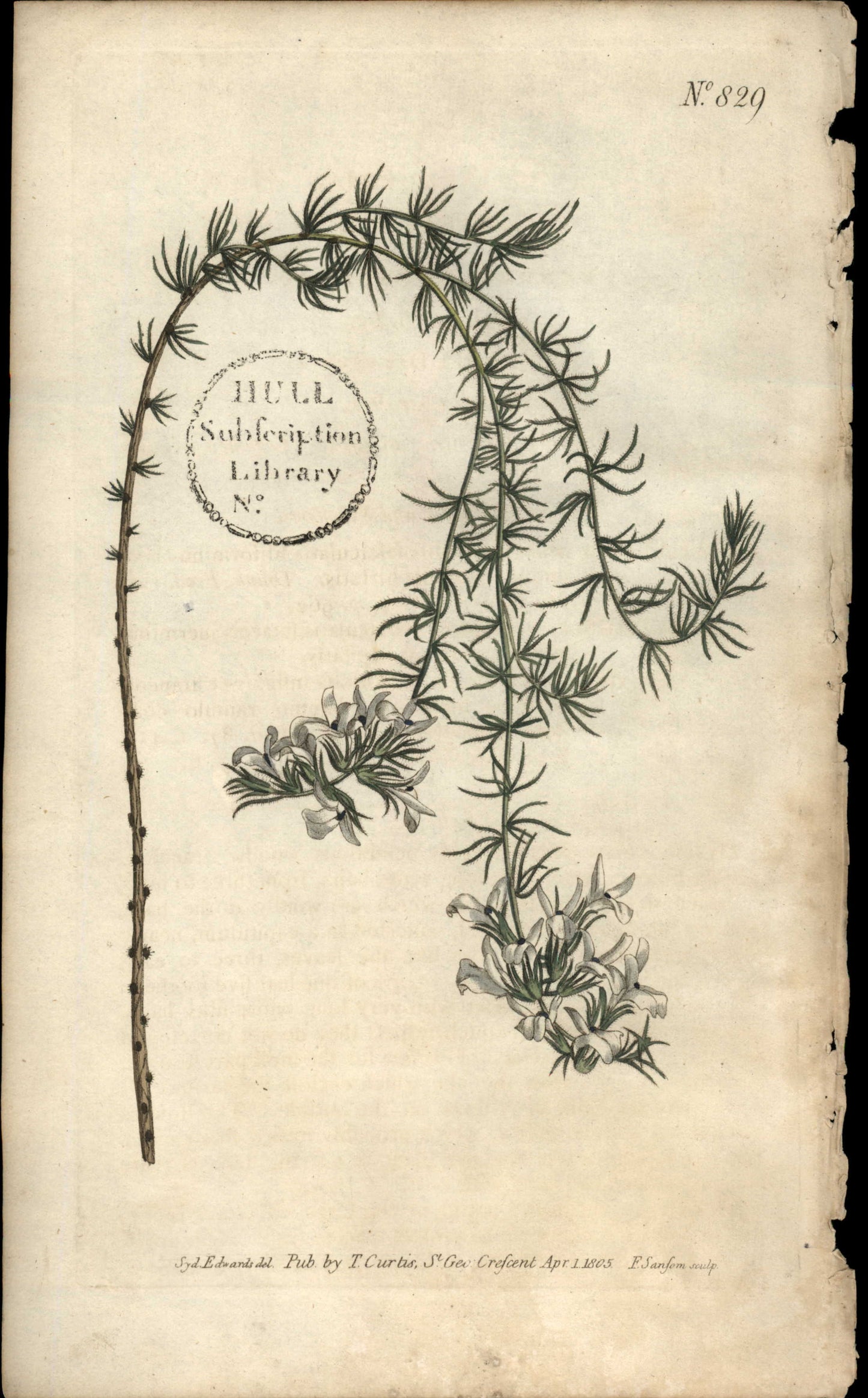
Curtis Botanical Magazine Plate 829 - Aspalathus araneosa (Hairy Aspalathus) | Original Hand-Colored Print
Curtis Botanical Magazine Plate 829 - Aspalathus araneosa (Hairy Aspalathus) | Original Hand-Colored Print
Couldn't load pickup availability
Original hand-colored antique botanical print from Curtis's Botanical Magazine - Plate 829, Aspalathus araneosa (Hairy Aspalathus).
- Plate: 829
- Latin name: Aspalathus araneosa
- Common name: Hairy Aspalathus
- Native region: Cape of Good Hope
- Flowering: June
- Flower colour: Bluish White
- Linnaean class / order: Diadelphia / Decandria
- Publication: Apr 1 1805
- Artist: S. Edwards
- Engraver: J. Curtis
- Medium: Original hand-colored engraving (physical print, not a reproduction)
Original Curtis text
Transcribed from the plate's accompanying description page:
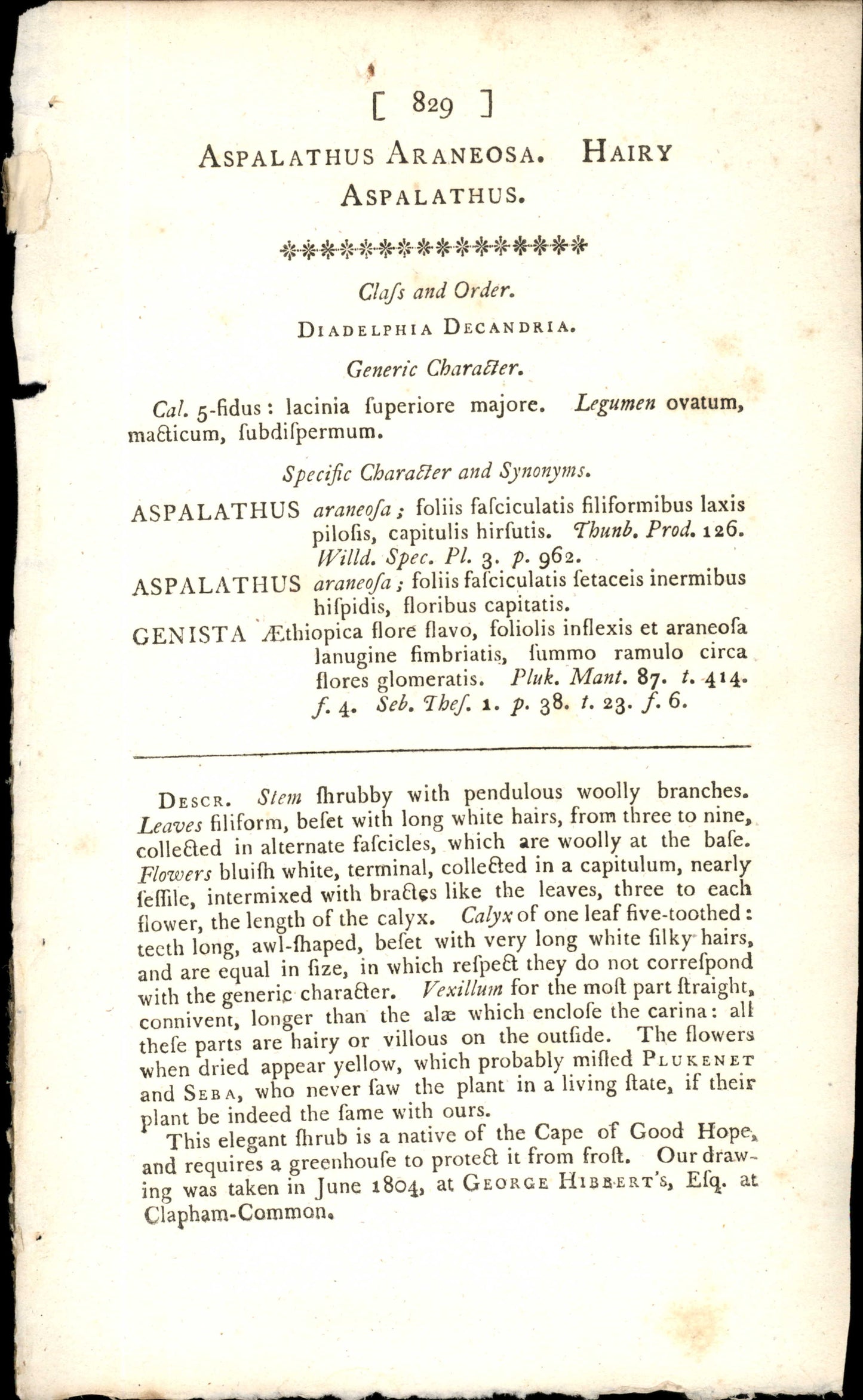
[ 829 ]
ASPALATHUS ARANEOSA. HAIRY ASPALATHUS.
. . .
Class and Order.
DIADELPHIA DECANDRIA.
Generic Character.
Cal. 5-fidus: lacinia superiore majore. Legumen ovatum, macticum, subdispermum.
Specific Character and Synonyms.
ASPALATHUS araneosa; foliis falciculatis filiformibus laxis piloſis, capitalis hirſutis. Thunb. Prod. 126. Willd. Spec. Pl. 3. p. 962. ASPALATHUS araneosa; foliis falciculatis setaceis inermibus hispidis, floribus capitatis. GENISTA Æthiopica flore flavo, foliolís inflexis et araneosa languine fimbriatis, lummo ramulo circa flores glomeratis. Pluk. Mant. 87. t. 414 f. 4. Seb. Thesf. 1. p. 38. t. 23. f. 6. DESCR. Stem shrubby with pendulous woolly branches. Leaves filiform, beset with long white hairs, from three to nine, collected in alternate fascicles, which are woolly at the base. Flowers bluish white, terminal, collected in a capitulum, nearly sessile, intermixed with bractès like the leaves, three to each flower, the length of the calyx. Calyx of one leaf five-toothed: teeth long, awl-shaped, beset with very long white silky hairs, and are equal in size, in which respect they do not correspond with the generic character. Vexillum for the most part straight, connivent, longer than the alae which enclose the carina: all these parts are hairy or villous on the outside. The flowers when dried appear yellow, which probably misled PLUENET and SEBA, who never saw the plant in a living state, if their plant be indeed the same with ours. This elegant shrub is a native of the Cape of Good Hope, and requires a greenhouse to protect it from frost. Our drawing was taken in June 1804, at GEORGE HIBBERT'S, Esq. at Clapham-Common.
This is an original plate from leftover publisher stock of Curtis's Botanical Magazine. It was never bound into a volume. This holding reached us through the British natural-history dealer Wheldon & Wesley. Sold as an original historic plate — please review photos for condition.
Share