Curtis Botanical Magazine
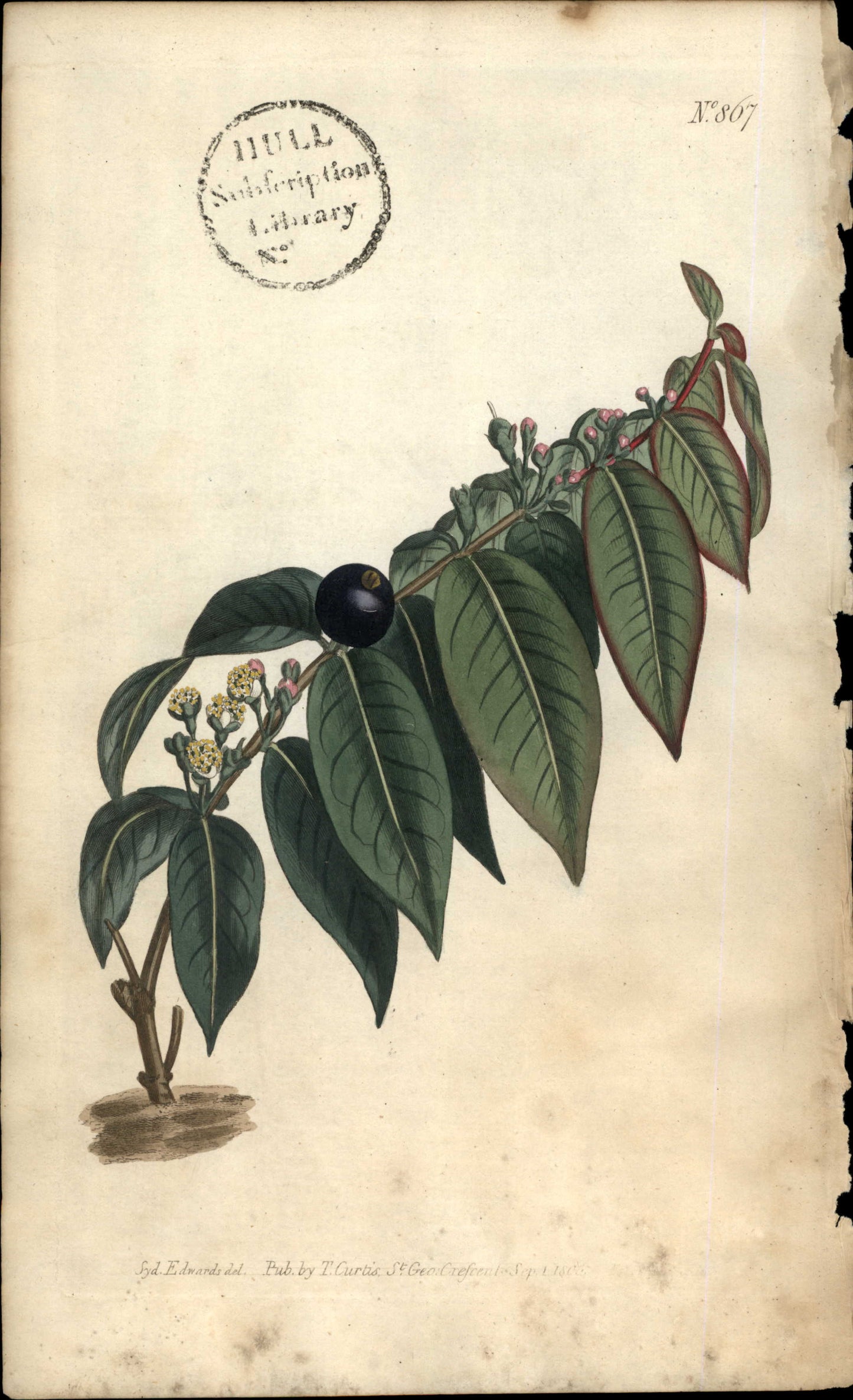
Curtis Botanical Magazine Plate 867 - Myrtus disticha (Globe-berried Myrtle) | Original Hand-Colored Print
Curtis Botanical Magazine Plate 867 - Myrtus disticha (Globe-berried Myrtle) | Original Hand-Colored Print
Couldn't load pickup availability
Original hand-colored antique botanical print from Curtis's Botanical Magazine - Plate 867, Myrtus disticha (Globe-berried Myrtle).
- Plate: 867
- Latin name: Myrtus disticha
- Common name: Globe-berried Myrtle
- Flower colour: Purple
- Linnaean class / order: Icosandria / Monogynia
- Publication: Sep. 1, 1805
- Artist: Syd. Edwards del.
- Engraver: T. Curtis
- Medium: Original hand-colored engraving (physical print, not a reproduction)
Original Curtis text
Transcribed from the plate's accompanying description page:
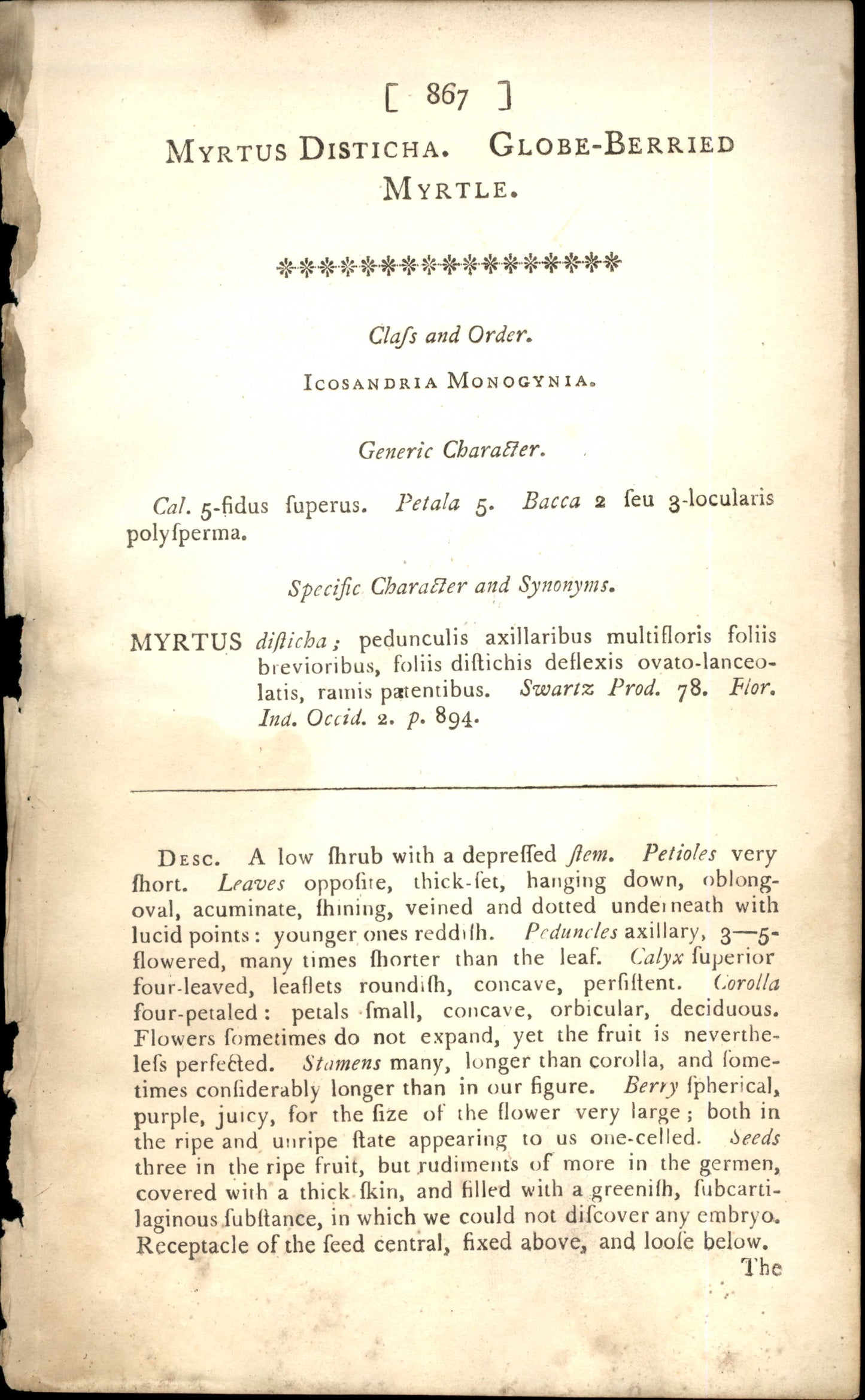
[ 867 ]
MYRTUS DISTICHA. GLOBE-BERRIED MYRTLE.
. . .
Class and Order.
ICOSANDRIA MONOGYNIA.
Generic Character.
Cal. 5-fidus superus. Petala 5. Bacca 2 seu 3-locularis polysperma.
Specific Character and Synonyms.
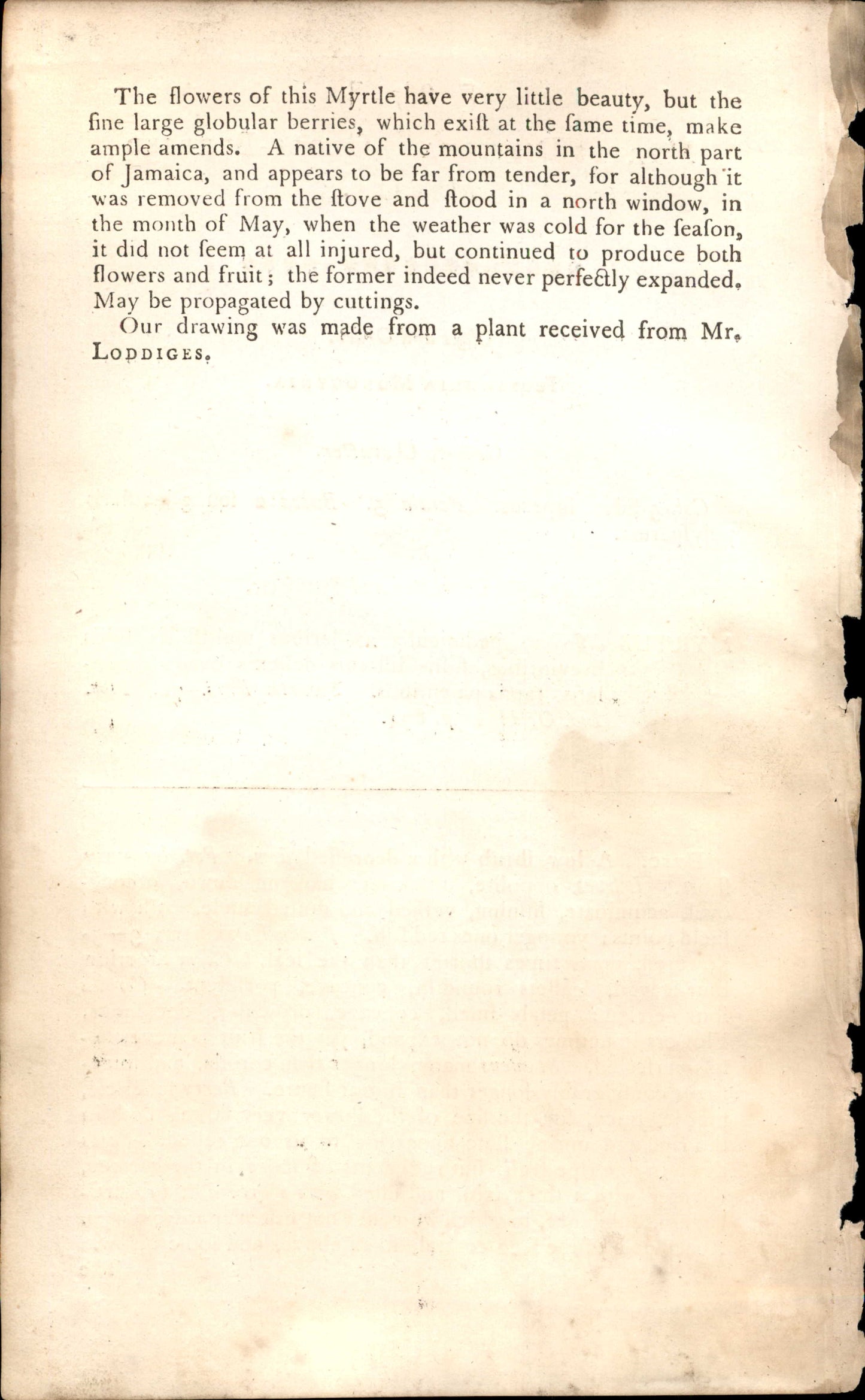
MYRTUS disticha; pedunculis axillaribus multifloris foliis brevioribus, foliis distichiis deflexis ovato-lanceolatis, ramis patentibus. Swartz Prod. 78. Flor. Ind. Occid. 2. p. 894. Desc. A low shrub with a depressed stem. Petioles very short. Leaves opposite, thick-let, hanging down, oblong-oval, acuminate, shining, veined and dotted underneath with lucid points; younger ones reddish. Peduncles axillary, 3-5-flowered, many times shorter than the leaf. Calyx superior, 5-leaved, leaflets roundish, concave, persistent. Corolla four-petaled; petals small, concave, orbicular, deciduous. Flowers sometimes do not expand, yet the fruit is nevertheless perfected. Stamens many, longer than corolla, and sometimes considerably longer than in our figure. Berry spherical, purple, juicy, for the size of the flower very large; both in the ripe and unripe state appearing to us one-celled. Seeds three in the ripe fruit, but rudiments of more in the germen, covered with a thick skin, and filled with a greenish, subcartilaginous substance, in which we could not discover any embryo. Receptacle of the seed central, fixed above, and loose below. The
This is an original plate from leftover publisher stock of Curtis's Botanical Magazine. It was never bound into a volume. This holding reached us through the British natural-history dealer Wheldon & Wesley. Sold as an original historic plate — please review photos for condition.
Share